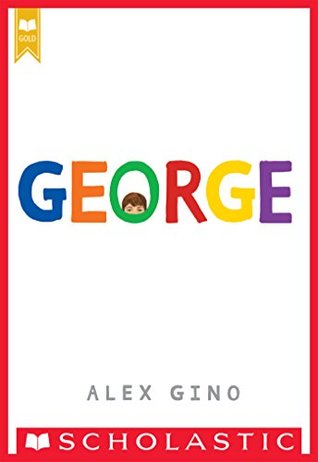
Watch this video interview with author of George, Alex Gino. Learn more about other literature on this topic!
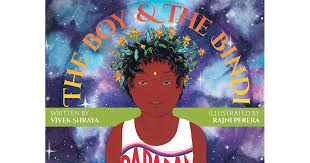
Another author breaking the molds on gender roles and stereotypes! Check out his book below!
The Boy & The Bindi by Vivek Shraya
Deconstructing the gender roles…
Vlog
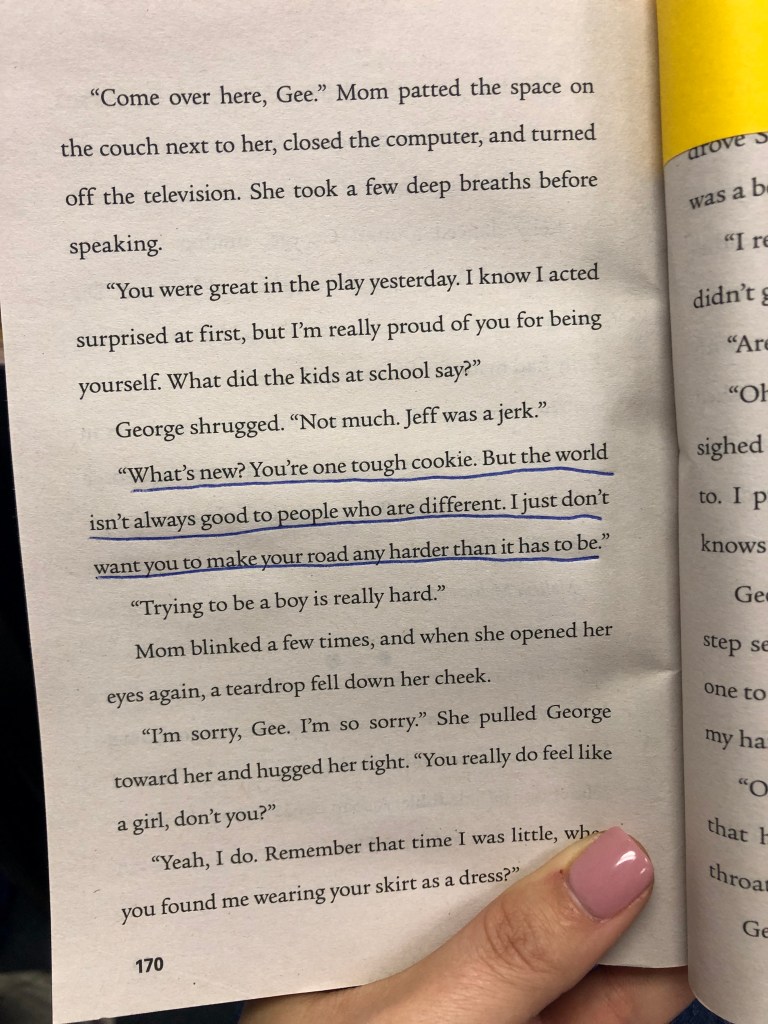
What’s new? You’re one tough cookie. But the world isn’t always good to people who are different. I just don’t want your road any harder that it has to be.”
“Children need to hang around a teacher who is asking bigger questions of herself than she is asking of them.”
Ruby’s shoes would take her A mile or so to school every day Where the white people hated her They’d scream and hold signs and tell her to go awayBut Ruby’s will was stronger Than the bigots with the signs could ever know She stopped every morning on the corner And prayed that someday the pain would goAnd she’d stop and she’d pray That all the hatred would go away She was only six years old but she knew Walk a mile in Ruby’s shoesRuby sat alone in the classroom She never dreamed the other children wouldn’t come They hated her for the color of her skin Well color is such an amazing illusionShe’d stop and she’d pray That all the hatred would go away She was only six years old but she knew Walk a mile in Ruby’s shoesNow Ruby knew about Dorothy And the ruby shoes that she wore She wondered about Oz sometimes Well, well no other child ever walked her shoes beforeAnd she’d stop and she’d pray That all the hatred would go away She was only six years old but she knew Walk a mile in Ruby’s shoesRuby, if birds can always fly Why oh why can’t you and I?Ruby’s shoes would take her A mile or so to school every day Where the white people hated her They’d scream and hold signs and tell her to go awayAnd she’d stop and she’d pray That all the hatred would go away She’d stop and she’d pray That no other children would be raised this way Ruby’s shoesIf birds can fly Then why oh why If birds can fly then why oh why can’t I
The implementation of culturally diverse literature in classrooms occurs when teachers make it happen.”
Culturally diverse literature, The Reading Teacher, Boyd, Causey & Galda
Week Six: The Parker Inheritance: A mysterious middle grades text
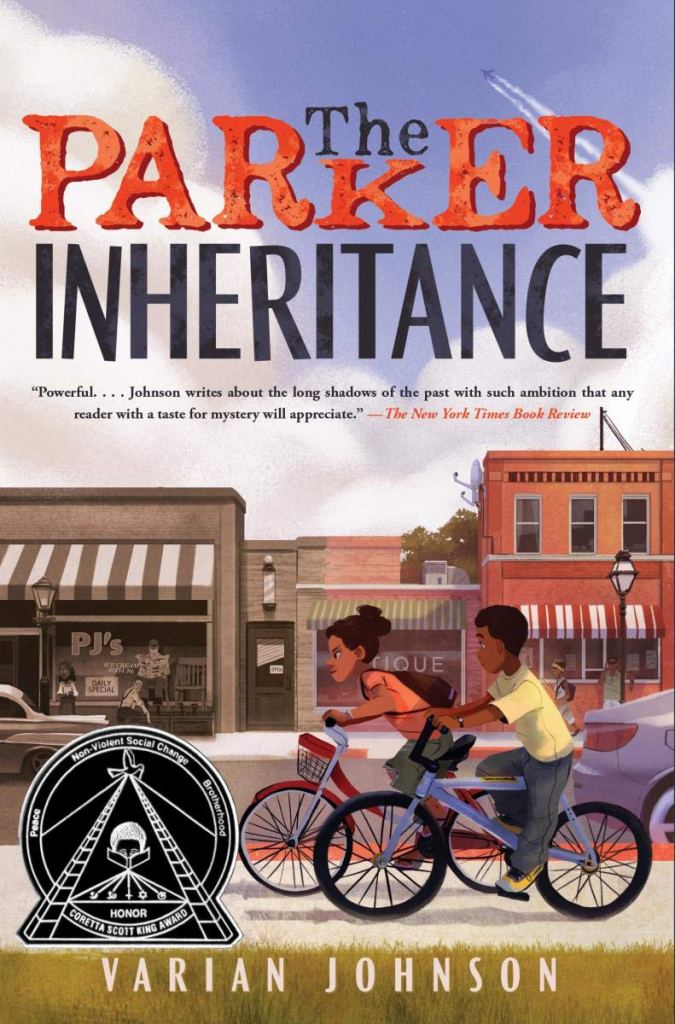
One of the first things I noticed about the cover of this book was the illustration and how it appears that Candice and Brandon are physically riding into the past. I love how both stories that are told in this text are shown by using black/white & color to show how Landry has changed over time!
Have you ever heard the phrase “curiosity killed the cat?” I feel as though this phrase fits Abigail Caldwell and her granddaughter, Candice, really well. As this story beings, we are given an inkling that leaves us wanting to know more about that night in Lambert and even more about the reasons why Abigail did what she did. Once twelve year old Candice Caldwell discovers an old letter in her grandmothers attic- there was no going back. Her curiosity about this secretive story could have killed the cat! This is a powerful story that teaches historical information about segregation in the South as well as life lessons including relationships and determination to never give up.
I think that Varian Johnson wrote this book in such a clever way that so many children will be able to relate to the characters and events. In this book, Candice Caldwell’s mom and dad are getting a divorce- and she has a new (but temporary) home. Some students in our classes will be able to relate to this because their own parents are going through a divorce. One of the main characters, Brandon, struggles with making friends and getting bullied by kids at school. Unfortunately, we will also have students in our class like Brandon that will be able to relate to this. We may even have students in our class that are people of color who know of members of their family that were alive and affected by the Jim Crow Laws in the South. They too, will be able to relate to this text. With most of the main characters in this book being people of color, our students that are people of color will see themselves represented as main characters in the book. Lastly, we could have students in our class that are really into historical events/ historical fiction. This book will appeal to them also because of the history of segregation and intense racism that existed in the South in the 1950’s and 1960’s. There are many reasons that this book should be on our classroom bookshelves!
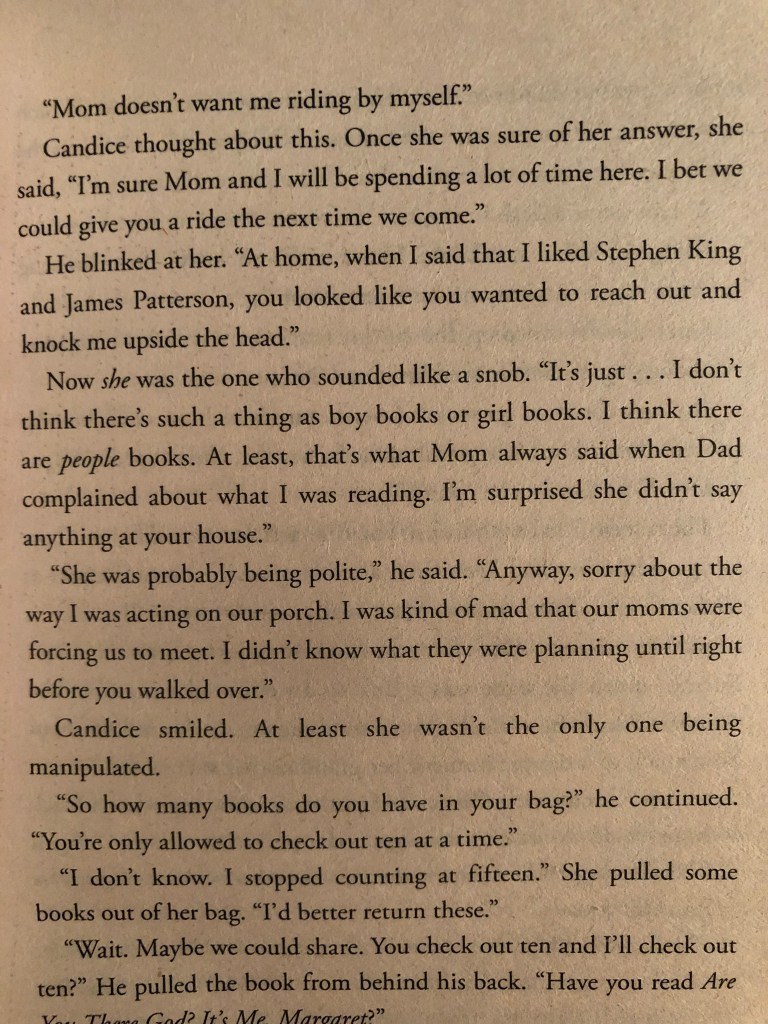
This book offers many opportunities to teach students about social justice issues that are prevalent in today’s society. These opportunities are also very subtle. While reading, I noticed that Johnson used the characters to show opposing opinions/ viewpoints amongst characters. For example, on page 102, Millie is talking about “praying for Quincy” and “hoping that his grandparents will straighten him out.” This offers an opportunity for students to subtly learn about the harsh opinions of others. I love how Candice challenges and questions those biased opinions throughout the book. She is so bold and often asks herself / others why it matters what kinds of books you read, why it matters who can/ can’t play on a sports team and also who you can and can’t be attracted to. Having a bold character such as she provides such a realistic role model for how we want our students to think about and question society. We want our students to be inclusive and understanding- and Candice Caldwell’s character is a perfect example. One of the largest opposing opinions prevalent throughout this book would be sexuality. In today’s society there are still many people who struggle with accepting the sexuality of others- especially if they are different then yours. In this book, Johnson teaches his readers about this social injustice in a way that kids are able to grapple with. He does this through his main character Candice- as she questions her friend Brandon and her own father. In this book, Candice parents recently go through a divorce- and Candice questions the root of the divorce. Towards the conclusion of the book- she discovers that her own father is gay. She also struggles watching Brandon get bullied and tormented by other boys who presume that he is also gay. I say all this to address that Johnson teaches readers that we are all people- no matter our sexuality- we are all people and we all matter. One of my favorite lines from the book was “It’s just… I don’t think there’s such a thing as boy books or girl books. I think there are people books. At least, that’s what Mom always said when Dad complained about what I was reading.” Little did I know, this was a huge foreshadow for later on in the book when we discover that her dad is actually gay.
Watch this video and hear from the author of The Parker Inheritance, Varian Johnson. Johnson is from Florence, South Carolina- a vibrant Black community much like the town of Lambert that he writes about.
Watch this short book trailer for The Parker Inheritance. This video left me wanting to know more- and I couldn’t wait to start the book and discover the secrets!
Critically Thinking
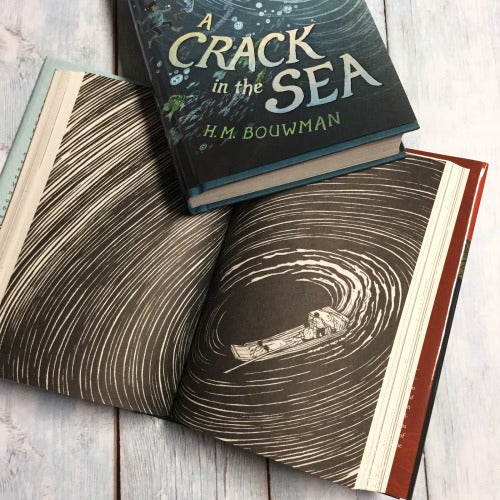
Discuss the setting. Was the setting essential to the plot of the book? Explain why or why not. Does it add depth to the book? The setting was absolutely critical to this book! First of all, this book is placed in the Southern United States- a predominantly white and conservative area. This particular book is set in a town of Lambert, South Carolina. Which according to the text, was very segregated back in the day due to the large white population. With the plot being centered around Abigail Caldwell’s career altering decision to tear up the tennis courts, which is connected to the historical events of Jim Crow Laws- the setting is undoubtedly essential to this plot! With the plot of this book relating to some historical background, depth is added to the book. Like H.W. Bouwman’s A Crack in The Sea, we find ourselves bouncing around from modern day to another time- which in this case is the time of the Jim Crow Laws. Adding another time period is a great way to add depth to the book and keeps student’s on their toes as they have to navigate a text. Something else that I noticed that adds depth to this book is the difference in the colors of the pages. At the very beginning, the introduction is written with white font on black pages. Then, in the modern day, the pages are just like any other paperback book. However, when the setting jumps back in time to the 1950’s-60’s, the pages are a darker, almost grey color. This was really helpful as a reader to help me keep track of the time period.
What did you learn about the time period in which the book was set? Do you think the time period was described accurately? How do you know? From The Parker Inheritance, students can learn about Jim Crow Laws which were laws enforced by state and local governments to enforce the implementation of segregation of black and whites. This included segregation of many public places including schools, restaurants, buses and city parks. This is why there was such an uproar when Abigail Caldwell torn up the tennis courts in the park. Students can also learn about the history of segregation in the South- a time when blacks and whites had to use separate facilities. Because of the history included in the book, Candice wondered if children were beaten and hosed in parks back then like adults were (this was so sad to me when I read this- children should not even have to have thoughts like this!) From this book, our students can take away how serious and scary these times were for the black community.
Is the author/illustrator a cultural or #OwnVoices insider (e.g., Do they self-identify as a member of the community portrayed in the book?)? Has the book been endorsed by a reputable organization and/or insider with expertise? Varian Johnson is an #OwnVoice insider because he too, like his characters, is a black person. He does identify as a member of this community- and in the video above- describes himself as a native from Florence, South Carolina- a vibrant Black community. This book has received the 2019 Coretta Scott King Honor Award- recognizing it for the empowerment and representation of Black people throughout the book. With that being said, The Parker Inheritance is a reputable book for young adults to read.
The Common Core Curriculum & Us
As teachers, it is our job and responsibility to teach from the Common Core State Standards. It is also our job to make learning these standards purposeful for our students. I think that as teachers, we (at least I know I do,) worry about finding a standard to align with every single lesson I teach and book that I read with my students. The reading teacher coming out in me wants to advocate that we can read a book to our students just for fun- to get them engaged and excited about literature. However, there are other ways to get our students engaged in reading within our classrooms. Lisa M. Ciecierski sheds light on some important ideas about the relationship between the common core and connecting texts. Connecting texts are texts that can be used in a text set or a unit of study that share these four relationships: companion texts, corresponding texts, contradictory texts, and cluster texts. The Common Core State Standard says that students must be able to “analyze how two or more texts address similar themes or topics in order to build knowledge or to compare the approaches authors take.” So this tells us that we have to teach connected texts- but not HOW we have to teach them. Here is where our creativity as teachers can come into work! Several things to consider are they way we want the texts to connect- are they thematically related, topically related, etc. Then, we must think about the order of which we are going to use the texts in the classroom so that they make the most sense to the students- and that the students will be able to clearly identify the ways in which those texts are connected. Lastly, like all learning we need to make sure that our planning for intertextuality is purposeful and well planned for. I thought this quote; “Students have been conditioned to learn in an isolated manner, which encourages isolated thinking” was really powerful and changes my thoughts about using single, isolated texts. As teachers, we do not want our students thinking in an isolated manner- we need to break the molds of this conditioned practice and get our students thinking about connecting texts in many ways to provoke wide spread, non-isolated thoughts as they grapple with literature.
Also, as teachers we need to challenge the Common Core and look into ways that we can expand our classroom libraries to make them more culturally diverse- so we can teach diverse content, as well as appeal to all readers in our classrooms. According to the Cooperative Children’s Book Center (CCBC,) the number of books that are written representing minorities/ people of color does not correlate with the actual population. Bottom line- we want to ensure that students in our classrooms are able to access books with people that look like them and that they can relate to. We want the books in our classrooms to support a variety of people, cultures, backgrounds and identities. When deciding which books to include, look for books that have been given awards- specifically those that award diverse texts such as Coretta Scott King and Pura Belpre. The most important take away from this is that as teachers- we need to expand beyond the suggestions of diverse text from the Common Core Appendix B, and use our resources to find more authentic and representative texts for children. We live in a time where many authors are creating rich, diverse texts for our students to read! Let’s place these on our shelves.
You may also enjoy:
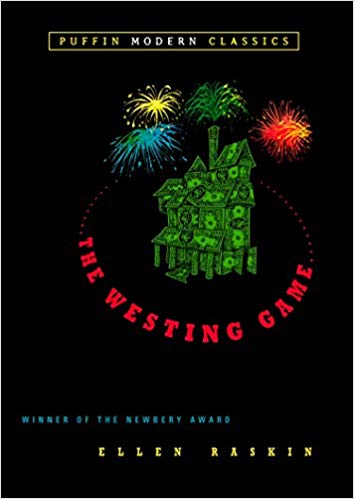
As suggested by The Classroom Bookshelf, the following texts are great to pair with The Parker Inheritance. Varian Johnson states in one of his interviews about the book that his book was inspired by The Westing Game. Ghost Boys and Holes are both award winning novels for middle grades students. These books will help you build a more diverse classroom library.
References:
Ciecierski, L. M. (n.d.). What the Common Core State Standards Do Not Tell You About Connecting Texts. The Reading Teacher, 71(3), 285–294.
Boyd, F., Causey, L., & Galda, L. (2015). Culturally Diverse Literature Enriching Variety in an Era of Common Core State Standards . The Reading Teacher , 68(5), 378–387.
Week 5: Freedom Over Me, Freedom in Congo Square and… Freedom for all
Freedom Over Me
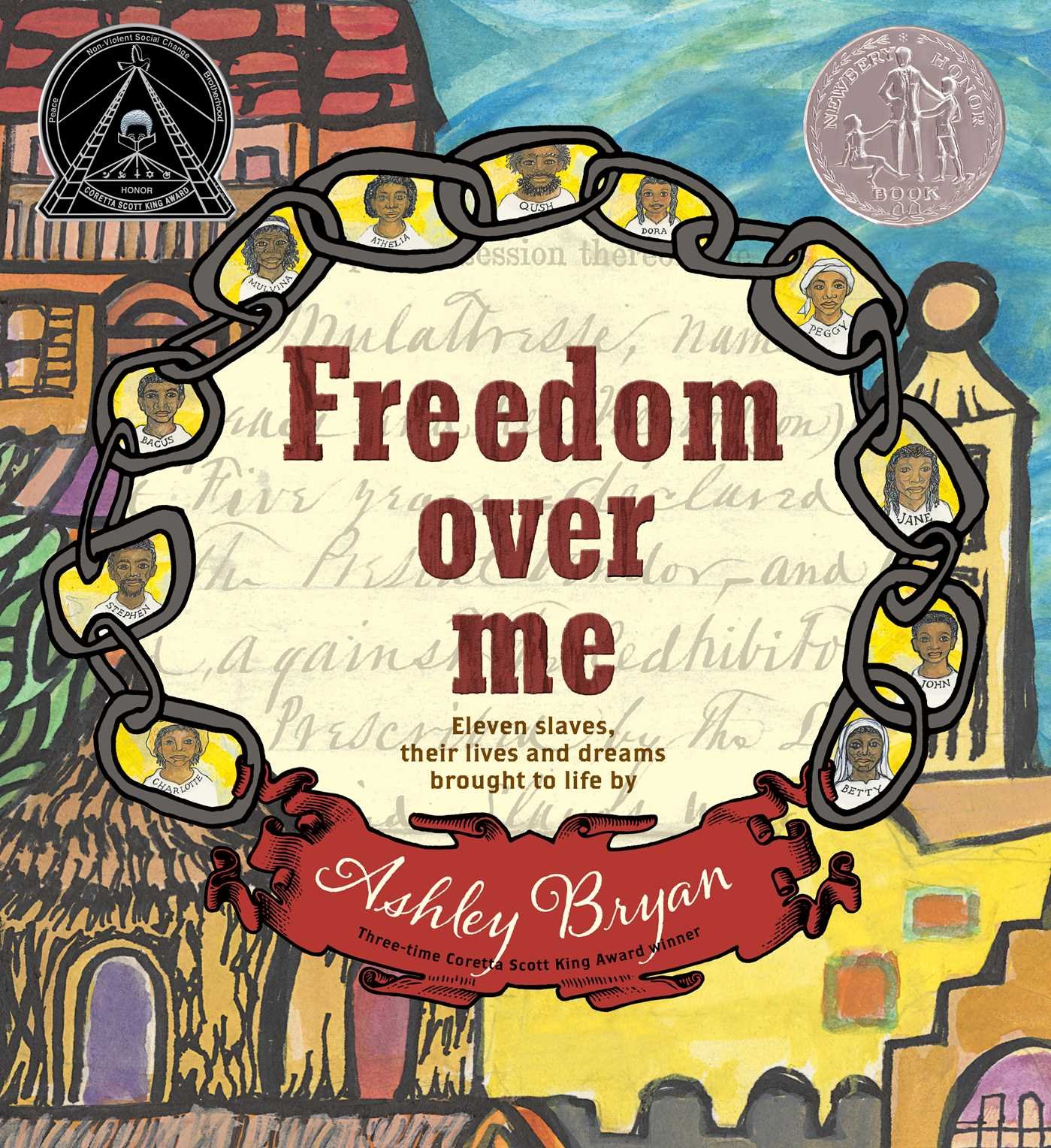
Freedom Over Me is a powerful story that brings eleven enslaved African’s to life through poetic verse. These stories are brought to life through author/ illustrator Ashley Bryan who reviewed the historical documentation of the appraisal of the Fairchild’s Plantation from the 1800’s. I loved the set up that Ashley Bryan created for the book. Each person has a page that tells about their life- their role on the plantation as well as a page that includes their dreams- their aspirations outside of slavery. Readers should pay close attention to the fonts used on the pages. All of the dreams pages are written in another font- a somewhat whimsical font that makes you feel like you’re dreaming. As the reader, we have to question ourselves and critically look at the authors reasons for doing it this way. Ashley Bryan took an interesting approach- he writes not as an Own Voice author, but as an author that sought the opportunity to share a good story about the lives of just a handful of the many that were enslaved. Slavery is such an important event in our history that impacted and still impacts the lives of many African Americans today. It is imperative that we use texts like this in our classrooms that can educate our students about the issue of slavery and the oppression that it cast upon those enslaved peoples.
Freedom in the Congo
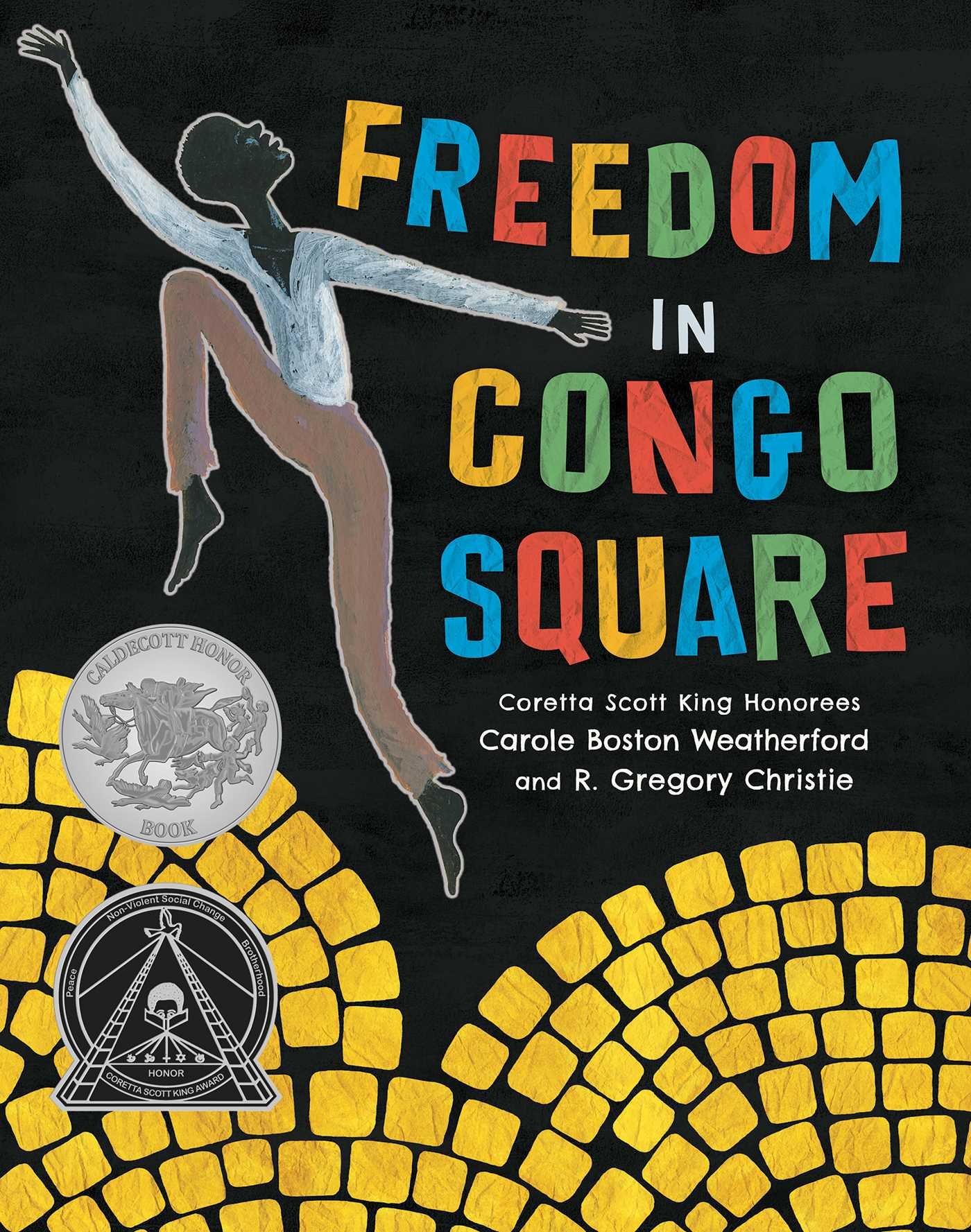
This book is so unique in many ways! The first thing that stood out to me was the format that the author chose to write the text in. Weatherford and Christie wrote this using poetic elements. These short , rhyming verses help young readers to understand the story more clearly over the traditional paragraph structure. When reading texts about such a critical point in history, we must make sure to have real conversations with our students about what they are seeing on the pages. Some of the pictures and words in the book have a deeper meaning meant to teach children about this time in American history. When reading these stories to our students, we can help support racial trauma and encourage healing within our classrooms for those who identify with the characters in the book. As Roberta Gardner says, it is important to use this text to discuss possibilities the enslaved people went through and create a safe place to learn and talk about these peoples. I enjoyed watching this video read aloud of the story that included musical instruments that I feel really helped me connect to the story as I followed along.
Are any characters privileged or marginalized? How are the lived experiences of historically minoritized populations represented in the text?
Both Freedom Over Me and Freedom in Congo Square are books written about marginalized groups of people. These books feature people of color who were impacted by the African Slave Trade and slavery here in the United States. Both Bryan and Weatherford talk about the lives of the people caught up in enslavement. Each character in these stories are a person of color, who historically and still are, marginalized peoples. In these texts, the historical events of their lives as slaves are represented. From the days in the cotton fields, to working on the plantations, these characters are living in oppression. In each of these stories, we see a glimpse into the lives of those who were held to slavery and how the yearned for freedom for a better life.
Persona Poem
I am unique and curious
I live somewhere on the bridge between the islands and anchored raftworld
I wonder why he chose ME to solve “the problem”
I hear the sounds of the water in the hydrolics
I want to know why I am different and struggle with social situations
I’m as quiet as a mouse at first, then I open up.
I question how I can solve the problem
I feel nervous they’ll know I can;t remember them and think I’m weird
I taste the fresh green bread still steamy warm it can melt butter
I worry what Kinchen is doing without me there
I excel at talking to fish- they understand me
I understand Kinchen only wants to protect me
I am unique, curious, intuitive and dependent.
I say I can do things on my own
I believe that there is something else the raftking is hiding
I dream about the translucent, wavy waters
I try to remember who I’ve seen- the twins were an enigma to me
I hope to resolve the problem
I was once left an orphan- afraid and alone
But now I am mature and belong to Old Ren- my family
I am unique and curious.
I am Pip.
Above is the Persona that I wrote about the character Pip from H.W. Bouwman’s A Crack in the Sea. Here I assumed the identity of Pip, a young boy who suffers problems with social situations and is curious about the world around him. The purpose of writing this was to get inside the characters head and give a real, authentic interpretation of the character after reading the book. Another purpose for this was to help my readers to identify with Pips thoughts and emotions. This is a critical tool for students to have as they are reading because it will help them better relate to texts they are reading. Writing a personal account about Pip helped me to better understand him as a character and his role in the story.
What reading/writing mini-lesson could be taught through this book or passages from the book?
As teachers, it is incredibly important that we model the activities we are giving and showing our students. I think participating in writing persona’s helps students realize that we value the importance of the poetry that we are teaching them how to read and write. Poetry opens a wide gate for students when it comes to literature. Many students do not enjoy poetry or see the value in its format. I believe there is a lot of artistic and creative value that makes up poetry. I think that after reading these books, we could encourage our students to engage in poetic writing forms as well. As a mini lesson for my students, I would read Freedom in Congo Square and then have students think about the rhyming format that Weatherford used. Then have them do a short activity with rhyming words that can help lead them up to writing their own piece of poetry with verses that exhibit rhyme.
As teachers, we can help our students learn to love poetry by introducing them to the many forms of it and reading them stories such as Freedom Over Me and Freedom in Congo Square. In the article Walking Into the Wardrobe and Through the Sliding Glass Door: Writing Persona Poems with A Crack in the Sea, we learn that writing has been found to help students deepen their understanding of a text so by having our students write about text, we can measure their comprehension. After all, writing is just a written form of our thinking. Elizabeth Frye and Lisa Hash offer great insight as teachers on how to use this I Am poem format in our classrooms with our students. In The Voices of Children, they give us a step by step model on how to do this activity with our students. It is so important that we model for our students to help scaffold their learning as they are deepening contextual comprehension.
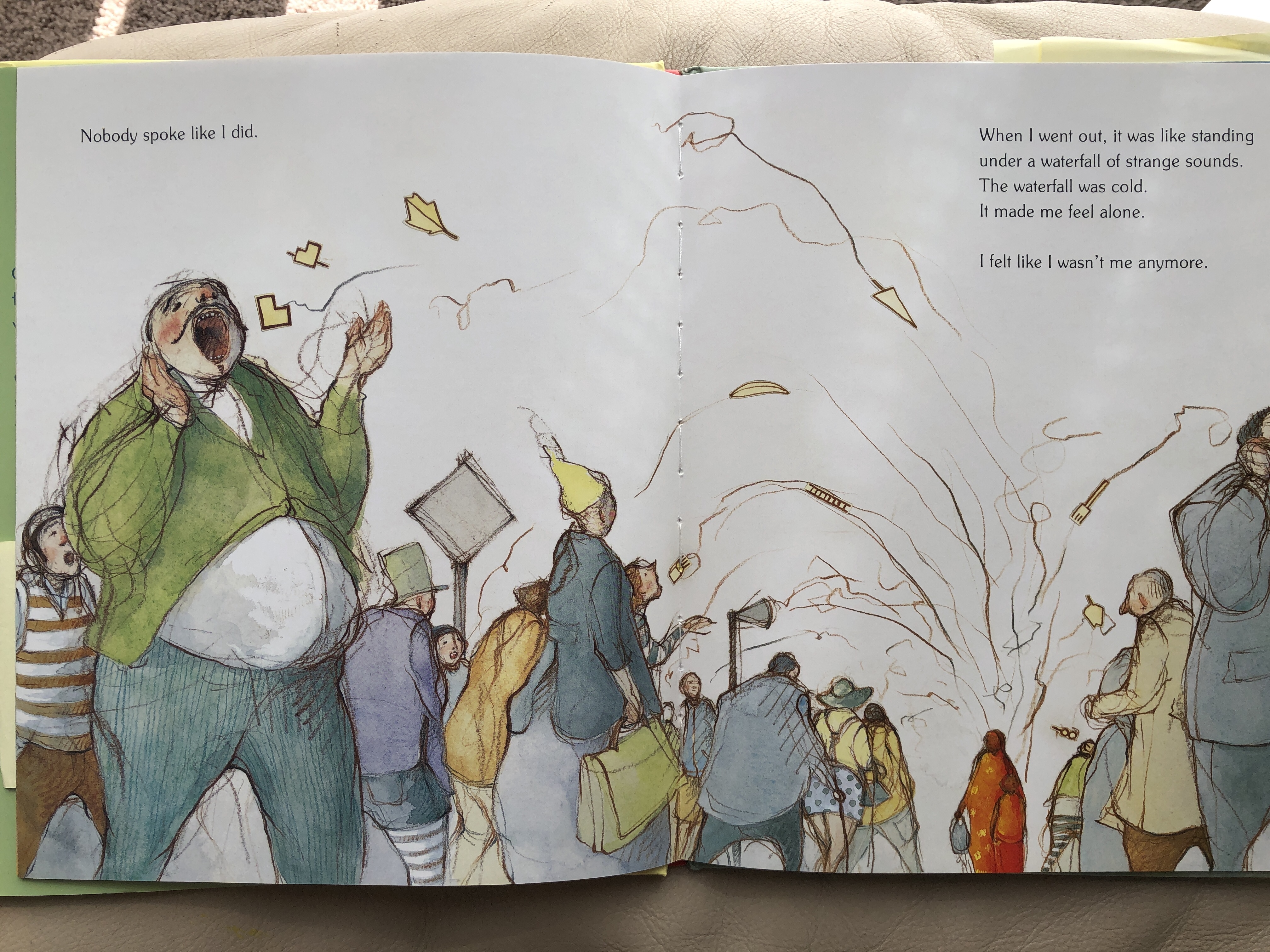
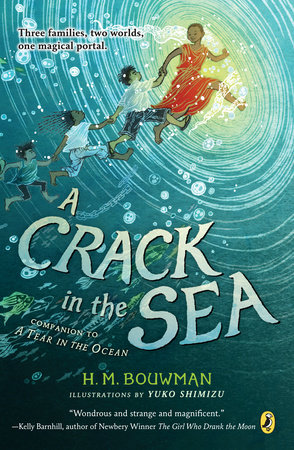
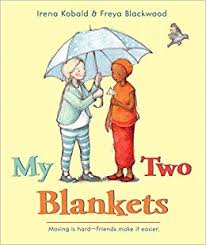
When reading Freedom Over Me and Freedom in Congo Square I was able to make some connections across texts from previous posts. Featured above is a spread from the book My Two Blankets, and the cover of the historical fantasy novel, A Crack in the Sea. In the spread from My Two Blankets, you see many people who appear to be talking, but only lines and symbols come out of their mouths. This represents that the main character, Cartwheel, does not understand the language that is being spoken around her in this new place. Similarly, the African people who were taken from their homeland during the Atlantic Slave Trade were suddenly immersed into a culture around people that were not like them and could not understand the language. After reading A Crack in the Sea, I built on my prior knowledge about the slave trade and the terrible conditions on board the Zorg- a famous African Slave ship. Reading these other books allowed me to build a schema for the topic/issue brought up in Freedom Over Me and Freedom in Congo Square.
References:
Frye, E. M., Hardin, B. L., Bouwman, H. M., & Stumb, A. E. (2018). Walking Into the Wardrobe and Through the Sliding Glass Door: Writing Persona Poems with A Crack in the Sea. Voices from the Middle, 26(2), 46–52.
Frye, E. M., & Hash, L. A. (2013). The Voices of Children: Re-imagining the Internment of Japanese Americans through Poetry. Social Studies and the Young Learner , 25(4), 30–32.
Gardner, R. P. (2017). Discussing Racial Trauma Using Visual Thinking Strategies . Language Arts Lessons, 94(5), 338–345.
“No one leaves home unless home chases you, fire under feet.”
Warsan Shire
Week 4: Take a “Crack” at Complex Text
About the book
Author: H. M. Bouwman
Illustrator: Yuko Shimizo
Publisher: Penguin Random House, 2017
A Crack in the Sea is a historical fiction novel written for upper elementary and middle grade readers. This book invites students to enter another world- a world of literature and imagination while also learning about some critical points in world history. A Crack in the Sea is a story that teaches children about slavery and the horrific experiences that being on the boats caused during the slave trade back in the 1700’s through a fantastical tale that takes readers from one world to the next. Students also learn about the migration of “boat people” from the post Vietnam War time period. Through these adventures from the first world to the second world, readers learn about heroic characters that face the odds against them (either through slavery or taking refuge from home), and persevere through the situations they are faced with.
Thinking Critically
Major Themes/ Take-A-Ways from A Crack in the Sea
There are a few major themes and take-aways from this book. The first that Bouwman expresses to us is the beauty of gifts. Everyone has a gift- a special gift. Bouwman gives each of her characters in this novel a unique gift. For example, Pip can talk to the fish in the sea. Caesar can sink to the bottom of the ocean and walk on the ocean floor. Jupiter is a storyteller. Each of those are uniquely different from the other, yet are all extremely important. This book celebrates gifts- and allows for readers to think about their own gifts and how they can celebrate the unique gifts that they have. As humans, we all have been given different gifts/ strengths that make us who we are. As teachers, it is our job to highlight our students gifts and make them feel celebrate for the gifts that bring to our classrooms.
Another key take- away would be a lesson that Bouwman is trying to teach her readers about making decisions in life. Sometimes in life, we have to make decisions and do things even if we do not want to do them. Many of the characters in this book faced hardships that caused them to make difficult decisions that might not have been their desired choice- but it was something they had to do to fight for their own lives and protect their families. Back during slavery and post Vietnam War time periods, many people had to make difficult decisions such as leaving their homes, leaving their families and leaving their belongings to board boats with terrible conditions that caused many to get sick or even die. And even if that wasn’t enough to worry about- they had to worry about being caught and facing terrible treatment. I think this is applicable to our students because sometimes in life, they may be faced with tough decisions and might have to do things they are not wanting to do.
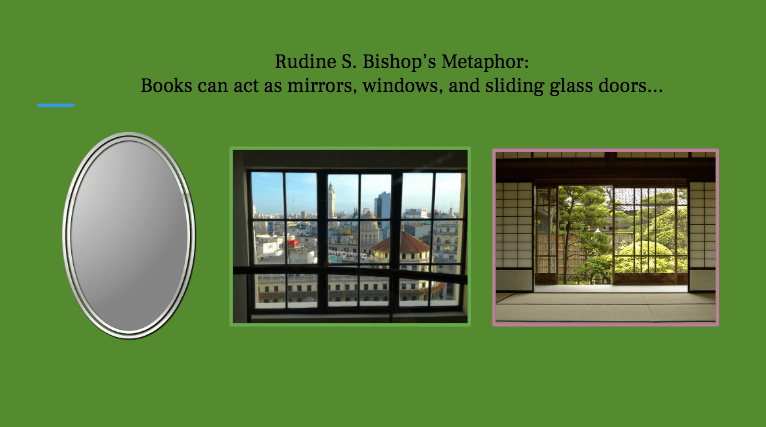
Rudine Bishop created a metaphor about books acting as mirrors, windows and sliding glass doors. A Crack in the Sea is definitely one of those books where students can go through a door. The author, H.W. Bouwman, invites readers to travel through a glass doorway into another world (or worlds I should say!) This is very important as Rudine says because it allows readers to to actually become part of the world that the author has created for them. Bouwman invites her readers to feel like they are part of this world she created by making characters that are believable, their age (because many of them will be 12 or so years old) and living through some real life situations. Some students might identify with some of the characters from this book because we might have students who had elders who were slaves or some who might have traveled to America seeking refuge from their home country due to war, terrorism or poverty.
How did the author make the book believable? In other words, how true is the emotional reality of the story…
The author made this story believable by incorporating historical events into this story such as talking about the slave trade and the Vietnam War. Bouwman told these historical stories through characters that she brought to life in her book. I think the most believable part of this story is the connections that readers are able to make. Many readers, including myself, will experience a feeling of empathy as they read the book. I felt empathy for many of the characters while they were on their journeys throughout this book. I cringed while reading how terrible the conditions were on the boats. I was sad that Kinchen and Pip were separated from each other. I was sympathetic for the children that did not have parents or guardians. I was inspired by Pip and they way that he wanted to come out of his shell and do things on his own without Kinchen. A story that is “believable” is one that makes you feel real emotions as you read- allowing you to collect with the characters.
Discuss the setting. Was the setting essential to the plot of the book? Explain why or why not. Does it add depth to the book?
The setting is critical to this story! Throughout the book, we travel back and forth from one world to the next. From the Islands to the Raftworld. It is important as the reader that we are paying close attention to the text so we know which setting this part of the story is taking place in. I think this is one of the most challenging parts about this particular text- it was really hard for me to follow along! I think middle school students may struggle with this as it is more complex than many of the texts that they have probably been in exposure to. In addition from traveling from world to world- we travel in time periods as well. We go from a very long way back in history- to the late 1970’s which seemingly, isn’t that long ago for me- but to our younger students, they feel as if this was really a long time ago! The changes of setting definitley adds depth to this book- we have layers and layers of information embedded in these various settings of the story such as the Islands, Raftworld, the boats and under the sea. The setting makes the book more believable as well. If students know that the setting is a real place, such as the sea or a country like Vietnam, that adds depth to the stories setting.
Please listen to this powerful poem called “Home” by Warsan Shire about being a refugee.
Please listen to Carina Hoang’s #OwnVoice about her experience as a boat person.
Watch these videos below to learn more about the Trans-Atlantic Slave Trade and Slavery:
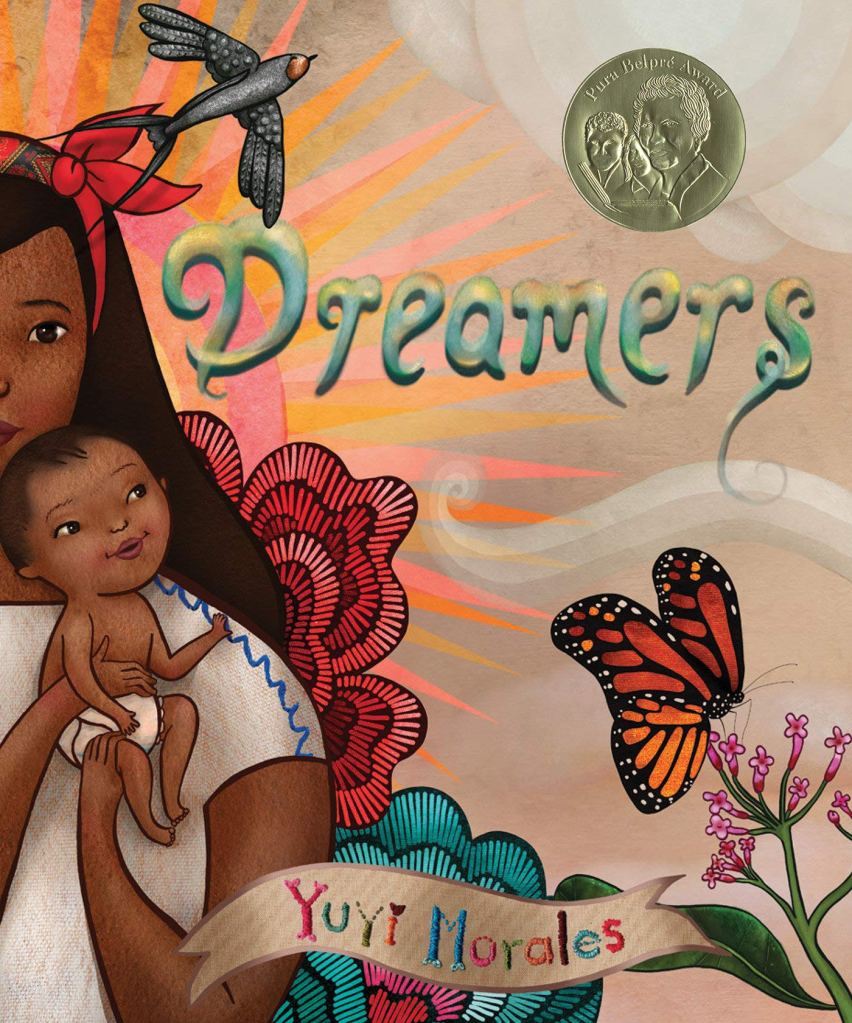
Dreamers is a children’s picture book that tells the story of a mother and her young child who leave Mexico and travel into the United States. Upon their arrival, they are unsure of their new surroundings as they do not speak English and cannot understand those around them. The mother emerges herself and her son into literature to help them learn about their new home and their new language. These stories teach them beautiful lessons- as does Dreamers for us! This book offers a unique story as it was written and illustrated by Yuyi Morales who writes with her #OwnVoice as she tells her own story about how she transitioned from leaving her home into a new place in the United States.
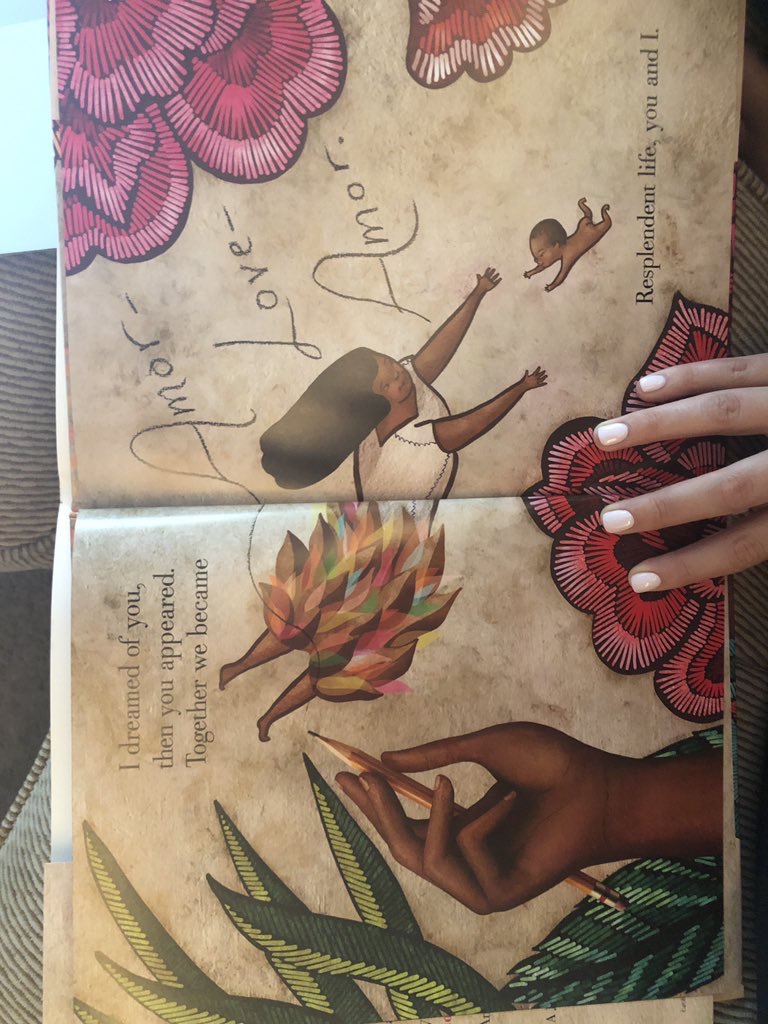
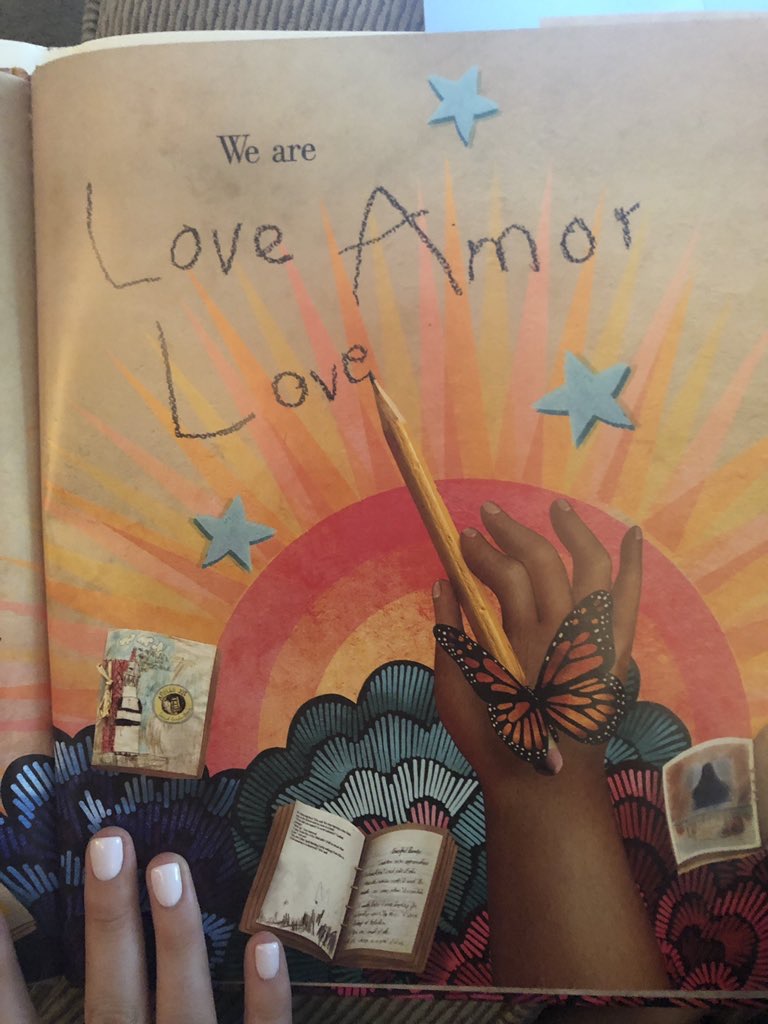
This story has many elements in it that readers can take away, but as a teacher, I think it is really important that we use this text to help our students understand how impactful literature is. This is a beautiful story about growth and learning through books. The images below show a spread that represents this. In these spreads, you can see the transition of the pencil from the mothers hands in the beginning to the child’s hands at the end of the story. This transition shows that as the mother acquired knowledge about their new home, she passed it along to her young child- who then begins to learn and grow as well.
Critical Thinking
Discuss one of the main characters. How did the author make this character unique and believable? What issues does this character grapple with? How does the character evolve across the book? How were you able to relate to the characters?
There are two main characters in this book- the mother and the child. The author made these characters unique and believable because she wrote the book in her #OwnVoice, meaning this is a true story about her and her son when they immigrated into the United States. In this story, the mother, Yuyi, grapples with several issues. The first of these is that she had to flee her home- leaving everything behind except for her child. That by itself could be very lonely and isolated. Another issue that she has to grapple with is being in a new place where she doesn’t know anyone or even how to communicate with them. She could not understand the words others were speaking- so the sought refuge in the library. As the book goes on, the woman evolves as she spends more and more time in the library reading and exploring literature. As time goes by, she eventually teaches herself and her son English by reading books! I was so amazed at this. This shows how important literature is to everyone! I do not feel as if I can relate to the characters in this book, because I have never been in this situation before, but I can say that as a teacher, I have seen how exposure to literature and quality books has impacted my students learning process and academic successes.
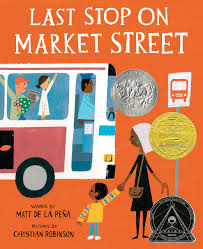
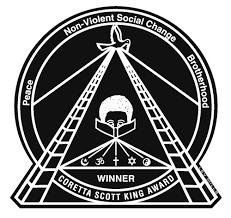
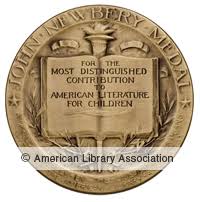
Each of these texts offers a beautiful story with a rich and powerful meaning. I think that an over arching common theme between the three picture books is that beauty can be found in any situation- it is all about our perspective. I love a good, quality, children’s literature book- and each of the books this week meets that criteria. These texts have been recognized by various award committees such as The Newberry Medal, The Coretta Scott King Award and The Schneider Family Book Award. Please notice the design of each award logo. Each represents important features of the award itself. The Coretta Scott King award includes symbols and words correlated with Dr. Martin Luther King Jr.’s mission. The Newberry Medal describes what it awards and the Schneider award includes brail as a way to highlight one form of disability. I was moved by these texts because of the subtle morals they displayed. You could not go wrong by placing any of these books on your classroom library shelves.
The Coretta Scott King Award: This award is named after Coretta Scott King who was the wife of civil rights activist Martin Luther King Jr. This award honors texts that include African American characters that highlight and foster appreciation for African American culture.
The Newberry Medal: This award is named after John Newberry and recognizes the “most distinguished contribution to American Literature for children.” This award is given to one book annually but also gives honor awards to those that were nominated for the award.
The Schneider Family Book Award: This award recognizes an exemplary text that celebrates and fosters appreciation for those with disabilities. These books have characters in them that have disabilities and celebrate their stories. This award is given to books that recognize and portray the disability experience for youth in children’s literature.
The Last Stop On Market Street
I LOVED this book. I have read this book several times throughout my teaching preparation courses- and each time I gain something new from this story. This story has so many elements to it; many of which I picked up after doing some research about the author Matt de la Pena. I think there are so many wonderful things about this book, but the one that I love the most is the way the character, CJ, learns to find beauty in their situation. CJ is a child who just wants to be like everyone else, and is not sure why his Nana brings him along on the city bus, with many different types of people, to go serve in the soup kitchen. His Nana encourages him throughout the book to appreciate his experiences and embrace each part of their journey. This story gives significant messages to it’s readers about the power of service, giving back and finding the beauty in your surroundings. I loved the illustrations in this book- and the personal statements that they include about their personal experiences with their grandmothers- which made me think about my relationship with mine and the memories I have growing up with them. The Last Stop on Market Street has received several honorable book awards for it’s literary quality including The Coretta Scott King Award and The Newberry Medal.
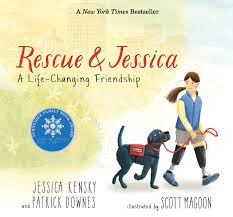
Rescue and Jessica A Life-Changing Friendship
This was such a beautiful story. I was SO moved at the end when I discovered that this was a true story about a survivor of the Boston Marathon Massacre. This is such an important event in history of my lifetime- and many of the students we will teach would have at least been born- so this is a historical even in their lifetime that will love on like the events of September 11th. It really resonated with me that this was something that had happened so recently (or what seems recent.) I’ve always been fasciated with how people handle tough life situations- and I think this book gives children (and adults) a very clear image of what it is like to experience something tragic and then learn to find he beauty in the outcomes that it faced. This book also is a recipient of The Schneider Family Book Award, which celebrates a book that was written with a disabled character. In the video below, these authors give some of their own insight to what readers can take away from this story. One of their messages to their readers was the power of loyalty- loyalty between people and animals. What a beautiful story of loyalty.
Please watch this amazing video of the co-authors of Rescue and Jessica. This really gives such a powerful message through the authors #OWNVoice. Plus meet Rescue and see how much he means to his owners. Click below to visit the NEADS website.
Meet Scott Magoon, illustrator of Rescue and Jessica. He brings his #OWNVoice into this story as well because he was a participant in the Boston Marathon Massacre in 2013. He used his artwork to help cope with the event and bring meaning to the story for the readers.
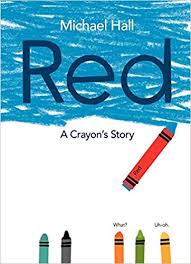
Red: A Crayon’s Story
I also really enjoyed this book and the message it conveyed about labels and the power that they have over people. In this story, a Red crayon is actually Blue. Throughout the story, Red struggles to live up to the label that he has been given. This is such a strong message for children about being who you are, and expressing yourself no matter what others may think. These days, society is so quick to place labels on people for many types of things. People are labeled based on race, culture, economic status, gender, sexual identity and many more. This book offers a great sense of social consciousness for readers as it teaches them to foster an appreciation for the “labels” they have been given and to celebrate who they truly are. I think this is a great story to use to teach kids to break the mold of labels and live their lives being who they are and proud of what they can do. Please visit the author, Michael Hall’s, website where you can enjoy a selection of his books and explore the story he has behind creating them!
I think there are many educational practices that can be taken away from these professional readings. Many teachers use the practice of modeling a love for reading and excitement as they read a book to get students engaged in the text. However, this is not the only way to get the students interested in reading texts. Choosing texts that you know students will enjoy is the key to getting them engaged. But also, finding texts that your students can personally relate to is another great way of getting them to engage with the text you are giving to them. The best way to do this is to build a diverse classroom library. Rudine Bishop offers some great insight on the importance of a diverse classroom library as she argues that diverse material is critical! Bishop offers a “3 Prong Strategy” that I think is worth my time to implement into my future educational practices which include engagement, appreciation and taking a critical stance. When using The Last Stop on Market Street, Rescue and Jessica or Red: A Crayon’s Story in my classroom, I can be sure to get my students engaged with these books through the powerful stories they tell and the beautiful spreads or illustrations they have within the covers. I can also share an appreciation for diverse peoples with my students as they will be learning about class/ socio-economic differences, persons with disabilities and labels that society forms. In order to teach my students to look at text through a critical lens, I will then have them try to relate/ make connections to their world in order to get them thinking about social issues. There are several social issues expressed in these children’s picture books that can help teach students valuable things about homelessness, hunger, disabilities, labels and more! I would love to implement activities into my classroom that students can do to get hands on experience with these issues such as having a class canned food drive or inviting someone with a service animal into our classroom to talk about their personal experience and relate that to the character/ authors of Rescue and Jessica.
Critical Literacy Strategy
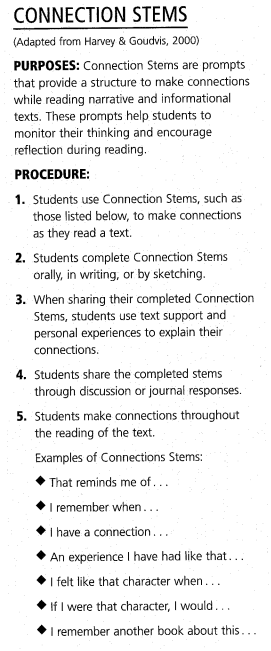
Rudine Bishop offers a unique perspective on the importance of diverse literature within our classrooms. She argues that we do need diverse texts and that the reason behind that is because our students deserve the opportunity to know that they have a voice and that they are represented in literature they are reading. She introduces a 3 step process which I discussed earlier as well as some critical thoughts about issues that this text addresses. There are many great literary elements of The Last Stop on Market Street. This book brings up several social issues such as poverty and hunger. In the book, CJ and his Nana utilize public transportation in their urban area to travel to the other side of town where the soup kitchen is. Based on the illustrations in the book, you can see the transition from one side of town, the wealthy side, to the other which is more poverty stricken. This addresses the issue of distribution of wealth and how many different types of people are effected by poverty’s reign. Also, the issue of hunger is shown in this book because of the service that CJ and his Nana provide at the soup kitchen. This book teaches children about the issue of hunger in many urban areas, and solutions that have been implemented to help relieve the issue of hunger for those who are homeless or cannot afford their own food. The Classroom Bookshelf, a book blog, addresses a really good point about the diverse characters in this book. The writer talks about how Matt de la Pena, without intentionally teaching diversity, is able to teach diversity to his readers through the characters and experiences he created in the story. One really great critical literacy strategy that can be used in the classroom to help teach critical awareness is the connection stems strategy. This strategy encourages students to make different kinds of connections as they grapple with the text. There are prompts that the teacher can give students to help them foster thoughts about various connections they can make to the story whether it be to the characters, the way the characters feel, an experience they once had or something that it reminds them of. These help students monitor their thinking and reflect on the text- which is part of looking at text through a critical lens.
Resources:
Bishop, R. S. (2016). A Ride with Nana and CJ: Engagement, Appreciation, and Social Action. Language Arts, 94(2), 120–123.
Pena, M. de la. (2016). Newberry Medal Acceptance Speech. Association for Library Service to Children
Cappiello, M. A. (2015). The Classroom Bookshelf. School Library Journal .Bishop, R. S. (2016). A Ride with Nana and CJ: Engagement, Appreciation, and Social Action. Language Arts, 94(2), 120–123.
McLaughlin, M., & DeVoogd, G.L. (2004). Critical literacy: Enhancing students’ comprehension of text.
What factual information did you learn? Did anything surprise you? How do you know if this information is accurate? There was a lot of factual information in Her Right Foot by Dave Eggers. Throughout the book, Eggers gives many facts about the Statue of Liberty such as her height standing 300 feet tall, her body being made of copper that oxidizes when outside, and most importantly, her right foot being off the ground. I was surprised at how much research the author did- and this information is accurate because of the real life pictures, artifacts and resources that the author included in the back of the book.
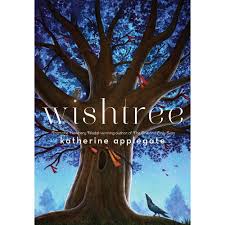
What moral values and social-political messages (race, gender, religion, class, poverty, environment, immigration, education, homelessness, etc.) are dominant in the text? Does the author foster social consciousness? The social-political message conveyed in each of these books is immigration. In Her Right Foot, the author talks about how the Statue of Liberty is a symbol of welcoming and acceptance for immigrants. In My Two Blankets, the message that is given is immigration and race. I think this fosters social consciousness because this book talks about the struggles of immigrating to a new place and not being able to understand those around you; which is something that many people can relate to. Wishtree also demonstrates several social- political messages including environment, race and immigration. In this story, Samar and her family are immigrants and new to their neigborhood. Some people in their town are angry that they are there, resulting in some conflict throughout the story. The Wishtree, Red, brings the environmental aspect into the story because he is the tree where everyone has left their wishes for hundreds of years. Samara wished for a friend, and the tree helps to get her one, along with the help of the many different animals that find a home within the tree. The tree itself was an image of diversity and acceptance, which is a major theme in the story.
Looking through a Critical Lens…
This spread from Her Right Foot is a set of pages viewed together to show the Statue of Liberty’s facial features laid out across both pages. I chose to share this spread with all of you because of the meaning it has embedded in it that it conveys to the readers. As teachers, we have to look at literature through a critical lens. When looking at this image through a critical lens, I admire the detail in the design of this page. When looking at her face, you can automatically ask so many questions. What are her eyes looking at? Why does her mouth look so serious? What is the significance of the crown she wears? Her crown is a representation of the seven seas, seven continents and the rays of the sun. I think there is a lot to be shown for this. The first thing to take away from this is the idea that all seven seas and continents come together to form ONE world. One world where we can all come together and can be a part of something greater than just ourselves. Another special meaning is that the spikes represent the rays of the sun- something that from any point on this Earth, we can all see. Her eyes are looking forward; showing that she is looking out to sea ready to welcome newcomers and immigrants coming to the United States. Other important things to note are the colors on the page. The dark night sky is something that we ALL look up to at night. The contrast of the blue and the green really makes the face of Lady Liberty stand out and the spread shows her vastness of size. From this one page, we can interpret many of the themes and ideas that this author is trying to convey to us, which is what makes this spread so valuable to the book and the reader themselves.
When I think about My Two Blankets I think about the great image that the “blankets” provide. I think that the author was very strategic in using a blanket as a way to describe the two versions of oneself. I think in life we all have “blankets” that are our comfort, and our refuge. In this story, Cartwheel struggles to understand and make sense of her new life, but with the comfort that her “old blanket” gives her she is able to embrace a “new blanket” in her new home. I also think we are able to learn a powerful lesson about friendship and diversity through this story. When I think about this, I think that the author made an intentional decision to make one of the characters a white child, and the other character a person of color. First of all, children are so innocent; so I think this exudes the purest example of friendship. I think this speaks volumes to the way that humans should live- putting aside differences to help one another and accept all people.
Creating a Text Set; how are these all connected?
As classroom teachers, it is really important that we have texts in our classrooms that can be used in a text set for when we are doing a unit of study on a particular subject. A text set is a collection of books/ other types of text that are related through a common theme, topic, idea or concept. Each of the texts we read this week; Her Right Foot, My Two Blankets and Wishtree are all considered to be a text set because they are connected based on the themes of diversity, immigration, and acceptance/ welcoming. Some of the major themes in these stories are the same, but there are also other aspects of each text that are different. When using a text set in your classroom, we want to give the students the opportunity to grapple with comparing and contrasting the texts to get a feel for how they are related and how they are not. For example, with this text set, two of the books we read were children’s picture books, while one of them was a chapter book. Another difference was that My Two Blankets and Wishtree told actual stories about characters who had immigrated and moved to another country where they were very different from the culture there. In Her Right Foot, you learn a lot about the history of the Statue of Liberty and what she symbolizes in relation to immigration and diversity. It is really important to ask ourselves and our students what each author says to make us think about what the other authors are saying. Then finally we can have our students evaluate their own thinking of the text and their opinions on these books. I really appreciated each of these texts. I loved the history and the witty writing style in Her Right Foot. I would love to do a social studies unit in my class one day and use this as a supporting text. Same with My Two Blankets. I thought that this book had a powerful message about diversity, “fitting in” and friendship. I would use this to talk about diversity and relationship building in my classroom. And Wishtree…. oh how I LOVED this book. I loved how we read the story through the perspective of a tree. I had never read anything like that before. I also really appreciated the strong message that this book conveys about acceptance of diverse cultures. And how at the end, when everyone came together, animals and humans, the tree was left to stay. I will for sure be placing all of these on the shelves in my own classroom!
Curricular Connections- How can you use this in the classroom?
As teachers in North Carolina, it is essential that we stock our classroom libraries with text that can support our curriculum standards and the objectives that we have to teach. In the upper elementary grades, there are social studies standards that align really well with this text. In grades 4, 5 and 6, students are learning about historical events, migration, immigration, patterns, and cultures. This is a great text that you can use to support these because the Statue of Liberty is a symbol for all of those topics. Teachers can pack lesson plans full of these standards when reading this book to their students. This book is an informal history lesson in itself! From the beginning of construction of Lady Liberty, to the messages that her right foot conveys, students are introduced to greater ideas such as immigration, freedom and welcoming/ acceptance. Using the themes of this book, we can teach students the history of why people immigrated to the United States, and why they still do now. This book can subtly give children complex ideas to think about through a lackadaisical children’s story about an American icon.
My Two Blankets tells a story of a refugee girl and her aunt who leave their country because of war. I think this is really applicable to many situations in our world today. There are a few standards in NC curriculum that want students to understand the push/pull factors when people migrate. A push factor in this story was that Cartwheel and her Aunt had to flee their country because of the war. You can also use this book to teach the beauty of friendship. In lower elementary grades, there are social studies standards that teach students how to build positive relationships and how to be a good friend. I feel like this book could be used to teach our students how to be good friends and help others when they need it.
Wishtree also offers several ways to tie in curriculum. As with the other two books, this book offers a chance to include social studies standards about immigration and the views that people have on it. This book also offers the opportunity to include science standards. This book includes a powerful message about the environment and nature. The Wishtree, Red, provides a home for other animals in the environment. This could be a great time to talk about science vocabulary and how important trees like Red are to certain communities.
I really appreciated the views from Amy Edwards, author of WOW Stories: Connections from the Classroom, about how to incorporate multiple perspectives into our classrooms. I think there is a lot to be said about Democratic teaching and including the perspectives of others in their teaching. I want to be able to have my students think critically and express their thinking as well as listening to others and accepting the way that they thought about something too. Using these texts, we could do literature circles, like she suggests, to get our students thinking about and discussing the big ideas and themes from this text set. In this sense I think we are able to introduce our students to real world problems and let them grapple with how this applies to their lives and the world they live in like Edwards says. Likewise, I also think there are some important takeaways from Jon Callow’s article, “Nobody Spoke Like I Did.” Callow argues that we can use children’s picture books to use in our classroom to convey these powerful messages about immigration and get students to interpret the meanings. He says that we can use these texts as a way to get our students to understand the issues with immigration and the struggles that people go through as they accustom to a new place. Something else I really took away from this was that by reading this book to our students, we might be able to reach a student or allow for students to make connections to the way the character, Cartwheel, was feeling in the book to their own feelings at some point in their young lives.
North Carolina State Standards
RI.4.3 Explain events, procedures, ideas, or concepts in a historical, scientific, or technical text, including what happened and why, based on specific information in the text. (ELA standard)
RI.4.8 Explain how an author uses reasons and evidence to support particular points in a text. (ELA standard)
5.G.1.4 Exemplify migration within or immigration to the United States in order to identify push and pull factors (why people left/why people came.) (Social Studies standard)
5.C.1 Understand how increased diversity resulted from migration, settlement patterns and economic development in the United States. (Social Studies standard)
References:
Callow, J. (2017). “Nobody Spoke Like I Did” Picture Books, Critical Literacy and Global Context . The Reading Teacher, 71(2), 231–237.
Edwards, A. (2019). WOW Stories: Connections from the Classroom . Worlds of Words.
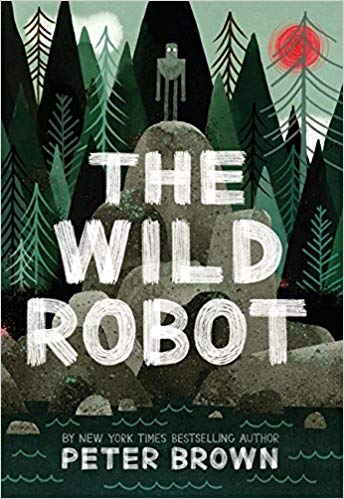
This book is about a robot named Roz that discovers herself alone on a deserted island. This is an empowering story of how Roz finds out who she is and how to adapt to her surroundings. Follow along as Roz learns to make this place her home- and how she decides to define home and her family.
Author: Peter Brown
Copyright: April 2016
Publisher: Little, Brown and Company
Discuss one of the main characters. How did the author make this character unique and believable? What issues does this character grapple with? How does the character evolve across the book? How were you able to relate to the characters?
Roz is the main character of this book. She is unique in many ways. First of all, she is a robot- a robot who finds herself existing out in the wild. Even though she is somewhat of a fantastical creature that has been brought to life, she experiences some really human hardships. Some of those hard ships include struggling to find who you are and your place in the world. Another hardship is finding and making friends that are different than you are. Throughout the book, Roz discovers who she is and is able to make friends with those around her on the island.
What special meaning or message does the book convey to you? Do you think this is a worthwhile theme for elementary/middle-level students? Explain.
This text is definitely a great choice to have around in your upper elementary and middle school classes because of the messages it conveys to the readers. One important message that is conveyed in this book is that we have the power to use the circumstances that we have been given and make the best of it. What I mean by this is that we have the opportunity to discover more about ourselves when placed in situations like Roz. Roz overcomes being uncomfortable in her situation by branching out and making friends as well as discovering who she is. I think that the reason this is so good for our elementary and middle level students is because we need to teach them that it is okay to struggle with your place in the world and finding where you fit/ who you are. This book gives a plain example of a robot (which we all know does not belong in the wild) adapting to the surroundings. This is important because the students that we will be teaching will be going through a lot of transitional change and might find comfort in relating to a character like Roz.
Related text….
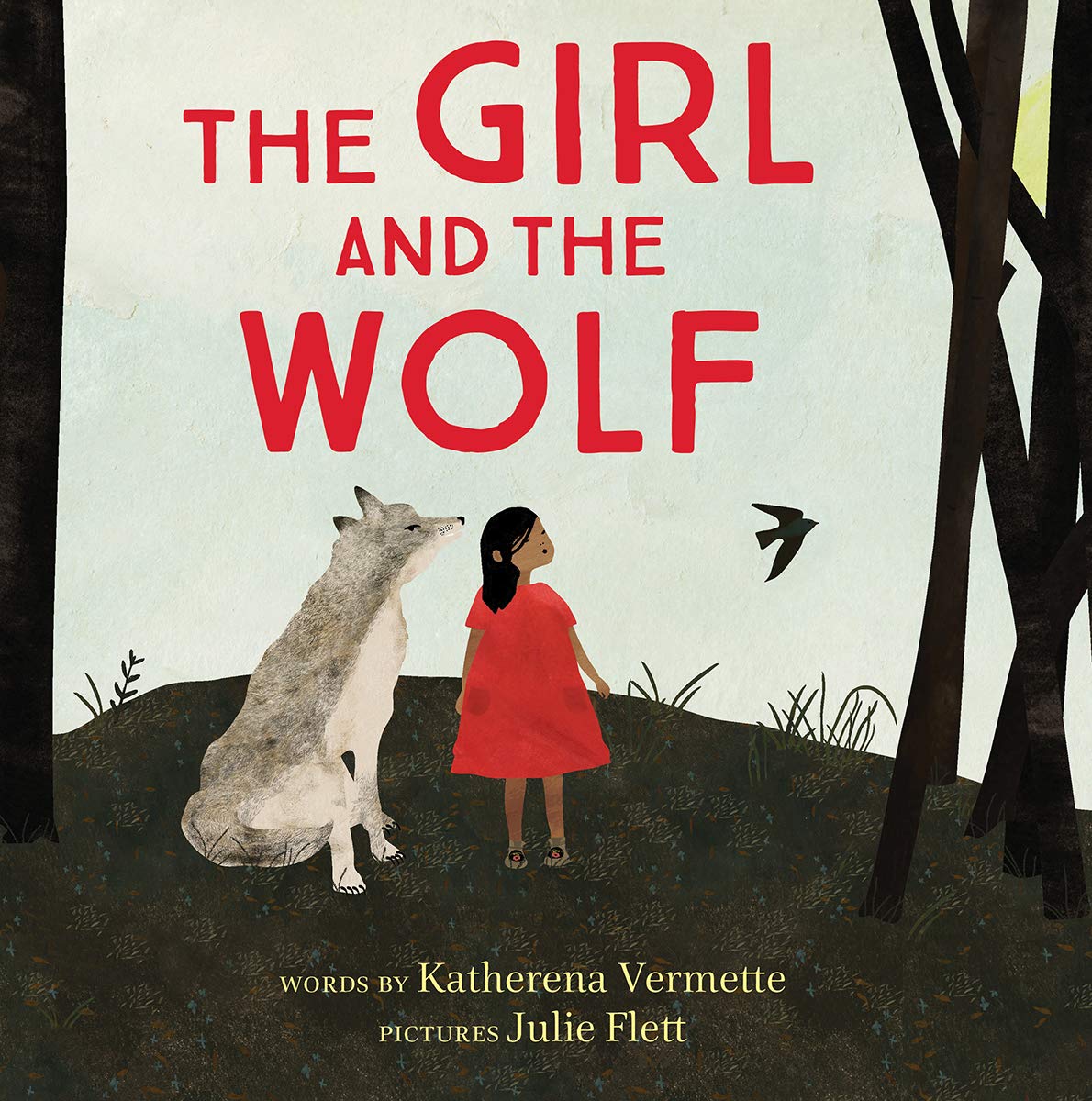
The Girl and the Wolf by Katherena Vermette
About the book:
This book is about a little girl who wanders astray from her mother. She finds herself among the unknown. Until… a friendly wolf befriends her! Follow along as this author reverses historical fiction norms and see how the little girl finds her way back home!
Author: Katherena Vermette
Illustrator: Julie Flett
Copyright: February 2019
Publisher: CELA Publishing
What special meaning or message does the book convey to you? Do you think this is a worthwhile theme for elementary/middle-level students? Explain.
This book conveys several special messages for not just children, but all who read this story. The first is that we should not fear the unknown just because we have not experienced it yet- or we are afraid to do something on our own. In this story, the little girl was unsure of her surroundings and was uneasy around the wolf at first. Then, the wolf helped her to find what her fears were keeping her from. Because she was so afraid, she was not able to think clearly and process how to solve her problem. The wolf simply allowed her to see what she already knew and helped her problem solve to herself out of the situation she had gotten herself into. This also displays that we can place trust in others who have our best interest at heart. As a child, there are many people in their lives who want to see them succeed and have their best interest at heart. I think these are both worthwhile themes for elementary and middle school aged children because these are critical ages where many things in their lives are changing or evolving. Their minds are being exposed to tons of information and they are gaining valuable knowledge to take with them on life’s journey. By introducing students to this text, they can learn from these themes that they should not fear the unknown, and that someone they may perceive as a “bad guy” can actually really have their best interest at heart and want to see them succeed.
Does the author use details accurately and does this work avoid stereotypes? Does the author use language authentically?
In this modern fiction tale, the author does a wonderful job at reversing the stereotypical views of characters such as “the big bad wolf.” In my experience, and probably many others as well, growing up we always heard stories where the “wolf” was the bad guy and that the would harm the characters in the story. However, in this story. that is not the case. This story empowers the role of the wolf and establishes him with a positive role in the story. I think that exposing children to literature where the roles are reversed will really help children to understand that certain texts do contain stereotypes. I appreciate the authors willingness to create a work that gave a positive nature to a type of character that usually is seen as a negative character. Also, the author does include some various languages in her text at the end of the story in her authors message. I think this is important because that makes this text culturally relevant to all readers. Also, one last note on this- I think this book does a great job at addressing this “big bad wolf” stereotype and how the “wolf” is not necessarily out to get you. By reversing this stereotype, students can take away that they should not be afraid to face what causes them fear- and just like the little girl in the story, give the unknown an opportunity to see and judge for yourself.
Applications to teaching…
What reading/writing mini-lesson could be taught through this book or passages from the book?
There are many things that we can do with this text as teachers to create reading or writing mini lessons for our students. One idea that comes to mind that I would like to implement into my classroom would be a reading lesson about comparing the two texts. With this book, I think I could do a great activity where we compare the two roles of “the wolf.” In The Girl and The Wolf, the wolf is seen as a friendly, wise character who helps the girl to get herself out of a tricky situation. Alternatively though, in classic stories such as “The Three Little Pigs” the wolf is an evil and something terrible happens at the end. This would be a good time to talk about authors perspective and different authors writing styles. Students could have conversations in small groups, whole group or even do a journaling activity where they write about their thoughts comparing the two stories.
In addition to this mini lesson, there are also some great things that can be done with The Wild Robot. One of my go to mini lessons for writing is a quick creative writing prompt that goes along with the text we are reading as a class. For this book, I would have the students imagine that they were the main character Roz. I would have them write about what they would do if they woke up one morning and realized they were on an island and needed to figure out what to do to survive. Then they can add details on how they would go about surviving on their own. Writing always pairs really well with fiction/ fantastical texts. I think that as teachers it is important for is to share texts like these two with our students to expose them to quality themes and messages from literature.
What makes a “good” book?
As teachers, I think it is critical that we evaluate the material that we place on the shelves for our classroom libraries. When I think of a “good book,” I think of a book that will provide a lesson/ moral or theme that we can teach our students. A good book is far more than a story with intricate pictures. (Although, beautiful illustrations really support readers and are so fun to engage with!) I also think that a good book has words that students understand- words that they know and use in their dialogue. A “good book” leaves a reader wondering and asking questions. A “good book” is more than just a story- it makes the reader feel something. As humans, we really connect with something through our feelings- and so having emotions and feelings as we read helps us connect to the text. It also lets the reader spark imagination and create images in their mind as they read. A “good book” can be related back to life and students can make connections whether it be to themselves or to the world. “Good books” inspire children to want to read more!
We have the power as teachers to introduce our students to stories. Stories that can teach them about life, lessons, friendship, growing up and so on. Kathy G. Short, author of Story as World Making, says that “We also tell stories to make connections, form relationships and create community with others.” As teachers, we can connect with our students via stories and share common experiences in our classrooms. Students will learn so much about themselves, each other and the world from telling/ listening/ reading stories at school. Our jobs as teachers is to “light fires” in our students. We are able to do that by exposing our students to texts such as The Girl and The Wolf and The Wild Robot to give our children a story that will help them learn lessons, about each other and the world around them.
Reading stories brings students a community. Colby Sharp, author of Readers Can Do Anything, spoke about how reading builds a community within the classroom. Whether this be students bonding over choice of text or being in the small reading group, this makes them part of a community of readers. When students share text, they are able to foster relationships and grow together as readers. One of my favorite points that Sharp made was about the value of positive reading experiences. When we share stories with our students, we are giving them a positive reading experience. These experiences (such as the mock Caldecott activity) will build up a love and confidence for reading that will help them as they grow and grapple with diverse texts such as The Girl and The Wolf and The Wild Robot. In relation to the children’s literature that we read this week and how providing diverse text allows for our students to relate to other cultures/ types of people, I would like to note that we are giving our students who do come from different cultures and backgrounds the opportunity to enjoy the text that they are reading.
Citations:
Short, K. G. (2012). Story as World Making. Language Arts, 90(1), 9–17.
Sharp, C. (2018). Readers Can Do Anything: Our Children’s Literature Day Lunch Keynote on the Transformative Impact of a Good Book. Literacy Today, 35(6), 40–41.Short, K. G. (2012). Story as World Making. Language Arts, 90(1), 9–17.








 Ms. Wild's Thoughts