Here is a virtual poetry lesson that I recorded myself teaching on Zoom so that students anywhere can access this. I used the mentor text Firefuly July to share with students and for teachers I used Kid’s Poems for 3rd and 4th Grade by Regie Routman.
Here is a virtual poetry lesson that I recorded myself teaching on Zoom so that students anywhere can access this. I used the mentor text Firefuly July to share with students and for teachers I used Kid’s Poems for 3rd and 4th Grade by Regie Routman.
Here is a collection of five of my favorite published poems that I have written in the past few months. I hope that you are inspired and can take it upon yourself to experiment with poetry. I invite you to begin writing your own poems in your writer’s notebook today!
Where I’m Fromafter George Ella Lyon
I am from carmex in the can
From peter pan creamy peanut butter
And dove bar soap.
I am from the white house with green shutters
Gravel driveway and tall pines
It sounds like a symphony when the wind blows
I am from the pink and white azalea trees
The tall grass
With soft white dandelions growing
I’m from the 4th of July cookouts and
Loud voices
From Nathan, and Ashley
And Colton.
I’m from giving big hugs and
Driving with a lead foot.
From choose your words wisely
Don’t let the bedbugs bite
I’m from Jesus loves you and
I know the plans I have for you declares the Lord.
I’m from Western North Carolina
Cornbread and stringing green beans
From the way grandpa Wade smelled his food before he ate it
And the way that Granny prays over every meal.
I am from parents who work hard,
Money isn’t everything, church on Sundays and family first.
I am from honesty is the best policy and always do your best.
I am from treat others the way you want to be treated
And love with all you have.
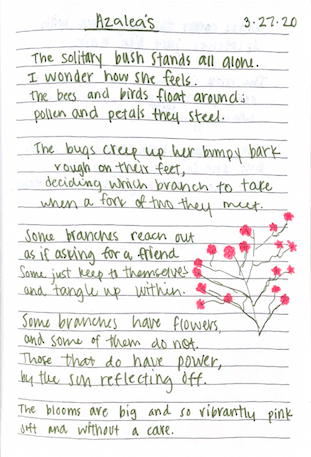
Azalea’s
The solitary Bush stands all alone.
I wonder how she feels.
The bees and birds float around;
pollen and petals they steal.
The bugs creep up her bumpy bark
rough on their feet,
deciding which branch to take
when a fork of two they meet.
Some branches reach out
as if asking for a friend
some just keep to themselves
and tangle up within.
Some branches have flowers
and some of them do not.
Those that do have power,
by the sun reflecting off.
The blooms are big and so vibrantly pink soft and without a care.
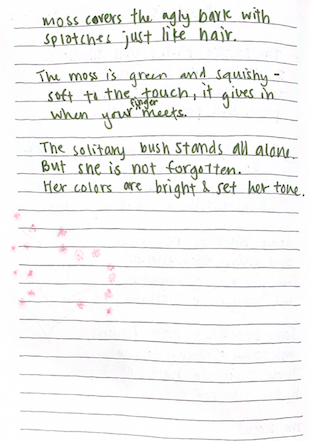
Moss covers the ugly bark with
splotches just like hair.
The mass is green and squishy –
soft to the touch, it gives in
when your finger meets.
The solitary bush stands all alone.
But she has not forgotten.
Her colors are bright and set her tone.
So Much Depends Upon after William Carlos Williams
So much depends upon
This folded paper clip
Coated with lavender hue
Holding papers together
Keeping them from flying
Astray
Binding my work
Within it’s tight
Embrace.
My “Found” Poem from a Small Moment Story I wrote myself
Lately I find myself
inbetween.
I am both professional and
college student.
Where both are
part of my journey.
Who I am
Who am I?
Inbetween is hard.
Straggling the fence
basically an adult.
Inbetween is my motto.
My Room at Duckett Road after Bathroom by George Ella Lyon
Due to the recent health crisis that our world has suddenly but also slowly entered, there has been a lot of time to stay home, get outdoors and reflect. As each day passes, I am learning more and more about the things in life that truly matter. Having to adjust to working, teaching, and learning online 100% has been difficult. Hours in front of the screen each day really does take a physical tole on the body.
With that being said, I have really tried to spend more time outside, getting fresh air, moving my body and breathing in all the good things I can, letting all the bad things go. With warmer weather on the horizon, I’ve noticed lots of changes outside around me such as birds chirping, flowers blooming and leaves budding on trees. I’ve written several poems over the past week that I would like to share with all my readers. The first was a poem I wrote inspired by something I saw in nature, and the other two are written using the Japanese form of Haiku.
Nature Inspired Poem
Haiku Poems
Haiku is an old Japanese form of poetry that is written in 3 lines- the first with 5 syllables, second with 7 syllables and the last with 5 syllables again. Haikus, just like other forms of poetry can be written about anything and does not have to rhyme. Haikus are a great way to invite students to begin writing poems. We can encourage students to use their surroundings to brainstorm thoughts and ideas for their poems. Haiku work provides a great opportunity to teach students many important skills such as syllable work, adjective work and observational experiences. My haikus are written with a focus of my thoughts during the long quarantine I’ve been experiencing. Although this is a serious time and matter for many, I have chosen to reflect on humor and positivity through my writing.
Looking for a great mentor text to help support your teaching of poetry to students? Creech’s Love That Dog is a favorite for many and gives a unique approach to poetry that is inviting for all learners.
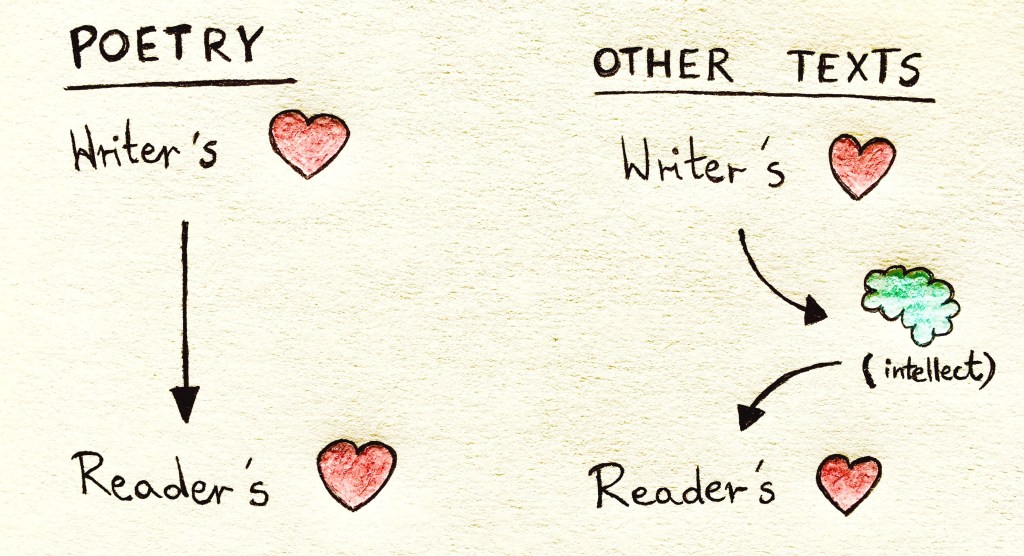
I found the above image online when looking for self- portrait poems and I think it’s a really good visual illustration for how poetry works and how we can view it for our students/ classrooms.
Poetry Reflection
My personal feelings about READING Poetry are not where I would like to admit. I really do not enjoy reading poetry because of the format. Sometimes poetry can be hard for me to understand and sometimes it can be hard for me to convey meaning from the poem. I don’t think that I spend as much time reading poetry as I do on normal text. When I read regular paragraph literature I read slowly and take my time to comprehend what I am reading. I feel like when I read poetry, in my mind I know that it’s a shorter text so I feel as though I don’t have to put as much effort into reading it. Which is a large factor in being able to understand and gain meaning from the poetry.
My personal feelings about WRITING Poetry are lighter than my feelings towards reading poetry. I think that this is because when I am writing, there is no specific format or type of poetry that I am writing. When I am writing poetry, there is no pressure to meet certain requirements
My personal feelings about TEACHING Poetry are that teaching poetry is going to be hard… I feel like if I see poetry as confusing at times, that my students will also view poetry as confusing at times. But I also view it as having the opportunity to teach students about the beauty and value of expressing their words through poetry so that they don’t feel about poetry the way that I do.
My criteria for how I know I’ve read a really good poem is when I am able to convey meaning and I am able relate to the poem in some way.
I think I (could) create a “Poetry Environment” in my classroom by giving students ample opportunities to observe, draft and create. I want students to be able to use their senses as they experience writing. In order to create a poetry environment, I think students need to be comfortable and excited about writing poetry.
Poetry Mentor Texts
Connections to course readings…
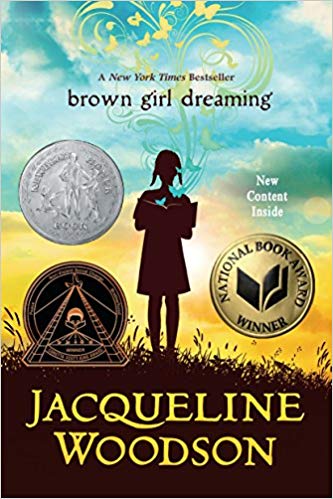
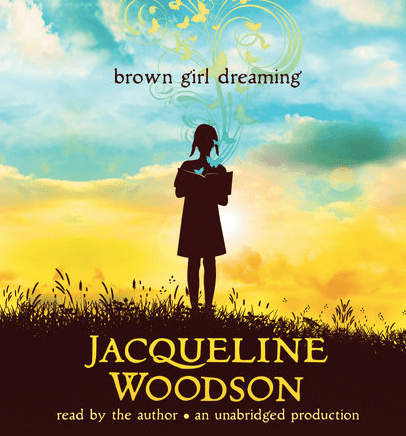
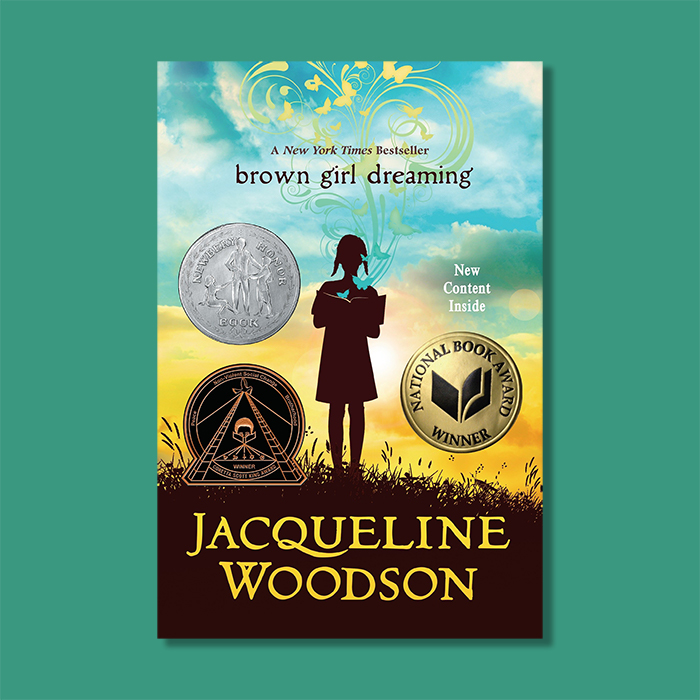
After reading Firefly July and All the Small Poems and Fourteen More as well as Brown Girl Dreaming, I feel well equipped to give students quality literature to help them mentor their own poetic writing. I think that providing students these sources of literature can really help them to “awaken” their hearts to reading and writing poetry. 😉 I also think that The Poem Farm by Amy Ludwig VanDerwater is a magnificent resource for us to show our students. One of my favorite parts of this site is that she has audio files that students can listen to of herself reading her poems aloud. I think that this is very powerful for students as they are learning the power and movement that poetry can have. She also reaches students personally by including their work on her website- this is very important for our students to see that others their age have written and published their writing on a real authors website!! I was really moved by Georgia Heard’s introduction in Awakening the Heart where she compares poetry to bread. Her opening discusses how anyone can do poetry- which is critical for our young students to understand but even more critical for teachers that are teaching poetry to understand. We can tell students that poetry lives inside of them. I wish that I hadn’t had to wait until college to have a professor instill this idea in me…. Thanks Dr. Frye 😉 I am inspired by the idea that poetry is everywhere- that it is in our voices and our students conversations. I’m grateful for Heard’s message in her book.
Self Portrait Poems
What Teachers Make by Taylor Mali
You want to know what I make? I make kids wonder.
I make them question.
I make them criticize.
I make them apologize and mean it.
I make them write.
I make them read. read. read.
I make them spell definitely beautiful,
definitely beautiful, definitely beautiful
over and over and over again until they will never
misspell
either one of those words again.
I make them show all their work in math
and hide it on their final drafts in English.
I make them understand that if you’ve got this,
then you follow this
and if someone ever tries to judge you
by what you make, you give them this.
Here, let me break it down for you, so you know
what I say is true.
teachers make a __________ difference! Now what
about you?
I chose this poem because I think it reflects a huge part of my life- teaching. Often times a big question that I get is “What will you make?” in regards to money. Quite frankly, I want to tell them that it is none of their business, but if I could find the right words to tell them- it would be something like this poem. From now on instead of falling into the trap of talking about money and benefits- I am going to tell people that I make a difference. That I make kids think and wonder. That I make them practice being a good friend and kind human. I chose this because I feel as though it lines up with who I am and how I view teaching. I want students to give it their best and keep trying even if they fail.
Listening to Grown Ups Quarreling by Ruth Whitman
standing in the hall against the
wall with my little brother, blown
like leaves against the wall by their
voices, my head like a pingpong ball
between the paddles of their anger:
I knew what it meant
to tremble like a leaf.
Cold with their wrath, I heard
the claws of the rain
pounce. Floods
poured through the city,
skies clapped over me
and I was shaken, shaken
like a mouse
between their jaws.
I chose this poem because I can connect it to my personal life experiences. My parents divorced when I was at a young age and even though I was so young, I can remember certain times when they would argue at home and my brother (who is two years younger) and I would overhear them arguing. They never blatantly argued in front of us- but we knew what was happening. On into my teenage years my mom and dad would argue every time they saw each other. My parents divorce is something that I have never quite gotten over- it’s something that shakes you. And for that reason, I chose this poem because it shows the true heartache a divorce can cause.
Where does poetry hide for me? What I believe poem…
I believe in Jesus Christ and God.
I believe in the Bible and Heaven/ Hell.
I believe in prayer and kindness.
I believe every child is innocent and deserve the best from adults.
I believe in a good education and leaving home to find your best you.
I believe in working hard and never giving up.
I believe in giving second chances and always staying true to you.
I believe in southern hospitality and home cookin.
I believe in my dad’s tender heart and my mom’s desire to be perfect.
I believe in first impressions and doing kind things for others.
I believe in humanity and positivity.
I believe in everything happens for a reason and laughter is therapy.
Poetry Reflection (*Revised after reading)
After reading, my personal feelings about READING Poetry have transformed a little bit. I found that I enjoy reading children’s poetry because of the format. Like I said before, sometimes poetry can be hard for me to understand and sometimes it can be hard for me to convey meaning from the poem, BUT, Firefly July helped me to see that poetry can be simplistic. I also think that now I better understand that there is also no right or wrong way to read poetry. I think that poetry is largely about the connections you make and how it makes you feel. With that being said, I now appreciate how poetry can allow you to feel emotions that maybe another genre wouldn’t.
After reading, my personal feelings about WRITING Poetry have transformed as well. Like I said before, I think that I like writing because there is no specific format or type of poetry that I have to write. When I am writing poetry, there is no pressure to meet certain requirements and I think this is a great motivation write. In addition to this, I learned that you can write a poem about LITERALLY anything. I feel like much of the pressure of thinking of a decent writing topic has been relieved. I think that before I read these sources, that I had to have some intense or extravagant and emotional topic to write about. But now, I have decided that is absurd and I can write about something as simple as my peanut butter and banana wrap I am eating for lunch.
After reading, my personal feelings about TEACHING Poetry have changed from fearing it will be hard. I still see it as having the opportunity to teach students about the beauty and value of expressing their words through poetry. I want to teach students that poetry does not have to be hard- that it can be as simple as writing about their animals, family, favorite toy, etc. I think that teaching poetry using Firefly July for younger students or Brown Girl Dreaming for older students will help make poetry a more enjoyable experience for students.
After reading, my criteria for how I know I’ve read a really good poem has stayed the same… that is when I am able to convey meaning and I am able relate to the poem in some way or another. For example, when I was researching self-portrait poems, I think that both of the poems I chose are really good poems because I can personally connect to them.
After reading, I still think I (could) create a “Poetry Environment” in my classroom by giving students ample opportunities to observe, draft and create. I want students to be able to use their senses as they experience writing. In order to create a poetry environment, I think students need to be comfortable and excited about writing poetry. I think that using mentor texts in my classroom will help to create a good poetry environment where students feel comfortable with writing and reading poetry.
When we write, our entire lives are like a stretch of mountains and we can choose where to dwell.
Barry Lane, After THE END, Mentor Texts pp. 77
How to “Slow down time in writing”
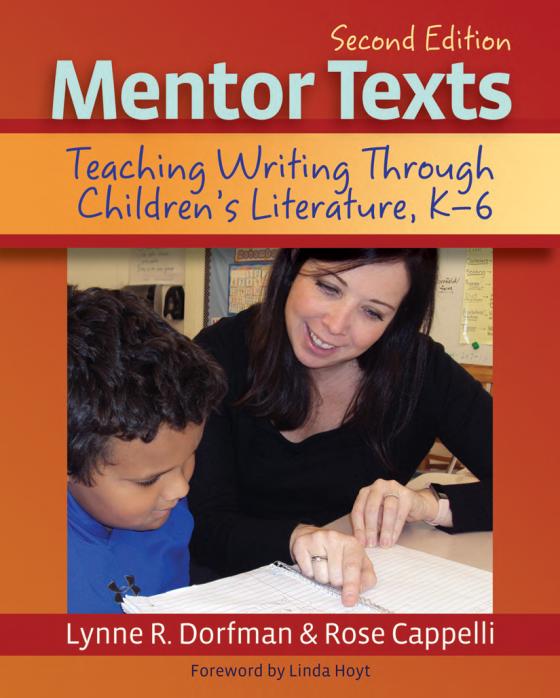
As teachers, we want to think about how we can get students to develop content in their stories. This is what we mean by “slow down time in writing.” Developing content is how we get students to tell their stories- without bouncing around and giving us a “bed to bed” story. Students tend to have a hard time staying focused on one small moment or event. By slowing down the time, we are hoping to give students the ability to tell their story with as much detail and description as they can. Slowing down the time teaches students to expand upon their writing to make it more rich and less broad. As Dorfman and Cappelli say, the goal for the students is to let their “reader feel like he or she is in the moment with you.” But how do we get students to do this?
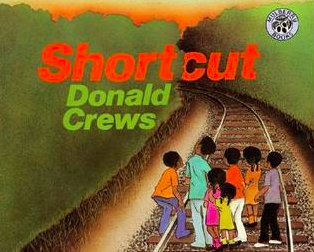
Mentor texts are a great approach to giving students ideas on how to stretch out a moment in their life to expand it into a personal narrative. There are many great mentor texts out there to help students learn to write their stories. A few of my favorites and some I am working with in graduate school right now are; Happy Like Soccer by Maribeth Boeltz, Shortcut by David Crews and Rollercoaster by Marla Frazee. Each of these books take a specific moment in time and enrich the moment to full capacity by including emotions, details, dialogue, and senses. Another way we can help students is by giving them the magnifying glass analogy. In Dorfman and Cappelli’s work, they compare focusing on one specific moment to write a story about to a magnifying glass. They say that writers “take moments in time and put them under a magnifying lens, examining every small detail for it’s worth, it’s importance to the whole.” I think this is a great method to get kids thinking about how they can narrow in their approach to their topic and focus on really making that one moment something special.
Tips and Strategies to help writers focus on their topic:
Dipping into dialogue
Descriptions: Digging Deeper
Appealing to the senses
Using Anecdotes to Reveal Details
Focusing on a moment (Small moment stories!!!)
Your Turn Lesson: Using Illustrations to Add Details
Six word memoirs are found to be a very effective method of writing instruction to use in the classroom to get students interested in beginning writing. This strategy explicitly helps students learn how to chose their words carefully- because they can only use just six words. By using only these six words, students can learn to pay close attention to the words they are using and creating strong words that flow together to complete their short thought.
Here is a six word memoir about my opinion on the last 3 months of graduate school:
“It will all be worth it” ~~~~~~~~~~~~~~ “It will all be over soon.”
Revising Leads and Growing the Narrative
According to Dorfman and Cappelli, the lead- the beginning lines of the story are critical. The lead is how you being a writing piece and can set the tone for the entire piece. Funny enough, one of the best ways to begin your lead is by talking about the weather. Everyone always jokes by talking about the weather, but describing the weather in the beginning of a story is a great way to lead your readers through the first sentence, paragraph, page or chapter. Here are a few examples from Mentor Text for coming up with a great lead:
Onomatopoeia
Snapshot setting
Snapshot character
Foreshadowing
Short, Choppy Statement
Action
Dialogue
Weather
Quote and many more!
Building a narrative takes time- it isn’t something that can be done in one day of writing. And it may take several lessons or mini lessons to help students understand how to build their writing over time. We have to let our students understand that writing in a process in which you begin by thinking of a topic, narrowing in on that topic, gathering details, and then composing them with a beginning, middle and end. This is why mentor texts and teacher modeling is so important because it shows students how to write their stories in a way that helps the readers to visualize and understand their story better. The whole purpose of slowing down the writing is to show students that they can take a small moment, and then expand on it to create a whole narrative with a beginning, middle and end.
I like the way that Caulkin describes a lead. She says that using the word lead might actually be misleading and that better words to use would be grab, yank or pull. This is because you want the beginning of your writing to be a hook- something that will pull the reader in close and keep them interested in what’s coming next. We want students to really take their time and expand on their leads to make them as strong as possible. An example of a powerful lead can be found in Boeltz’s Happy Like Soccer. Boeltz begins her story with comparing and contrasting two emotions- that nothing makes her happier than soccer but also nothing makes her sad like soccer. This is a great lead because this makes the reader want to know more about Sierra’s contrasting feelings and more about her life story.
What is narrative writing? Many of us may have a hard time explaining this concept to our students- especially those in the younger grades. What does narrative writing look like in the younger grades classrooms? Well, in order to teach students how to write their own personal narratives, we have to share examples of narrative writing with them as mentor texts. A great example of a mentor text that can be used with elementary aged students would be Happy Like Soccer or Ask Me. While using these as mentor texts, we can show students the importance of sharing their own stories- stories about their lives. That is all narrative writing is- a personal story! Narrative writing is very important to students because it allows them to know that their writing has a purpose- a purpose to share themselves with others. This gives them a sense of agency within their own writing. Allowing students to have time to write personal narratives is worth while because they can take ownership over their writing and this will give them motivation to write.
How can we help students with finding writing topics?
As a beginning teacher, I have really struggled in my role this year as a reading interventions specialist when it comes to getting my students excited about writing. Writing is something that many students feel as though they are not good at- hence why they always say that they “don’t know what to write about.” Something that I have really come to love is the idea of creating heart maps to help students gain ideas of things they can write about. When you have students creating heart maps or hand maps, they are creating writing topics without even knowing that is what they are doing. Once they have created their heart map, they have a list of writing topics on hand whenever they need! Students should be writing about things that are accessible to them- things that they know about. When students are writing about things that are important to them, they will feel more motivated to write and feel agency for what they are producing.
One example for how to help students find writing topics can be sharing mentor texts with them that include another persons personal stories. One mentor text that I find particularly helpful is Happy Like Soccer by Maribeth Boeltz. This book is a personal narrative about one child’s experience with soccer and the story she tells about her life through soccer. She compares things in her life to the feelings that soccer give her. This is one idea that we can stress to our students is that writing is created through feelings. Writing is associated with feelings. Having students create heart maps can help them brainstorm ideas of things that they like- then they can write about those topics or how those topics make them feel. Have students brainstorm things or people that they love. Then, demonstrate to them, using your own heart map, how to pick ONE thing and then expand upon that ONE thing by telling a personal story about that ONE thing.
Finding a Writing Territory
What is a writing territory? A writing territory an area of writing where an author/ writer may specify in writing. Our job as teachers is to help students find their own writing territory. But how can we assist students in finding their own writing territories? Giving students opportunities to write often will allow them to feel more comfortable with writing and help them discover their own territories.
While thinking about the quote that Clifton gave the author of Launching Writing Workshop, I cannot help but agree and advocate for the importance of this statement. If we don’t imagine ideas, thoughts, stories, etc. in our minds, then how can we put them into words or pictures on a page? Personally, I want to take this idea of imagination and run with it. I think there are so many things we can get students to think about and write when they are using their brains to imagine. Not only do we want students to do this, but we also want them to imagine themselves as WRITERS. We want them to see themselves as writers in a sense that they know their writing matters and we care what they have to say. In order to get our students thinking and feeling like writers, we have to treat them like writers. What do I mean by this? Well, initially we can begin by talking to them like writers. We can address our students with “Okay, writers- let’s get out those writers notebooks because we are about to open up writers workshop time!” Another way that we can get students engaged in thinking/ feeling like writers is by acknowledging their ideas and stories, talking to them and showing our excitement over their stories. This will give the students agency over their own writing and make them feel proud of what they are producing. Not only are we their teachers, but during writers workshop, we also become their coach. Teachers are coaches as students are writing, meaning we are interacting with the students AS they are writing. This can look like us maneuvering around the room and stopping to have what Calkins calls “table conferences.” These are times where you can stop by various groups of students and observe them as they write while interjecting and encouraging them as they write. There are many things you can say to students but one suggestion that Calkins article gives is that we can show interest in their work as well as help them begin by jotting down all their ideas at the top of the page so they don’t forget all the details they want to include in their writing.
Writers Workshop in the classroom…
What does the writers workshop look like in the classroom? How should I implement writing time to have a writers workshop? What should I teach during writers workshop?
Writers workshop is a time where teachers can model thinking out loud and invite students to write about their own life experiences. When we lead a writers workshop, it is important to focus on a specific strategy that students can use to apply to their writing in their writers notebooks. When you begin a writers workshop, begin with an idea or a topic. One of the ideas from Calkins article is to think of a person and the “moments” that you have memories of with that person. This is a great way to get students thinking about topics, and then brainstorming in order to choose subtopics to write about. During the workshop, teachers should go around and make sure that students are implementing the strategy as well as organizing their thoughts to get them down on paper. Writers workshop can be a time for many discoveries, stories, conversations and common experiences. Common experiences are VITAL when you are making thinking visible for your students. For example, when you are modeling HOW to write, you want to make sure every student has had the same experience so that they can equally contribute to the writing process. One large role of the writers workshop is to help students understand that writing is a process. Writing does not just happen with the snap of your fingers. When starting out with writers workshops in the classroom, we have to let our first topic be something that is accessible to them- something they can see themselves doing.
How to find a topic:
Think About It
Speak It
Write It
Then:
Draft in front of them (10-15 minutes)
Model thinking out loud so that they know how writers think (writing is a PROCESS!!)
Encourage students to have different experiences
Invite students to hear about you (your own writing)
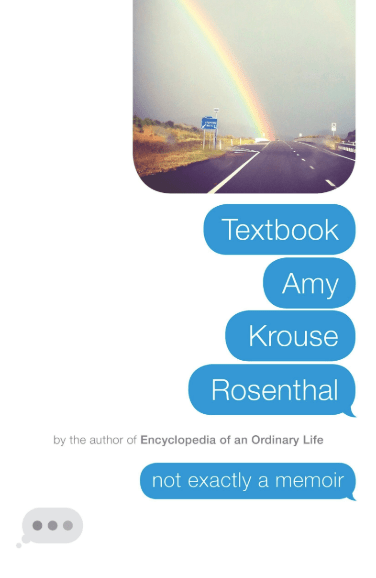
This book is literally so funny and relatable. Rosenthal writes about truth in life, nitty gritty feelings, emotions, actions and thoughts. She is hilarious and her writing process has already sparked so many thoughts in my own mind and encouraged several entries in my personal writers notebook. One of my favorite pages from this section of the book was on pp. 113 where she writes “It is easy to fall in love with someone who passes the time at the airport gate strumming their guitar.” I thought this was so inspiring because I find myself falling in love with Ty (my boyfriend of a year) more and more everyday. So after reading this, I decided to make an entry about the little, quirky things that I love about him. Here is an excerpt from my journal “It’s easy to fall in love with someone who freely gives me his t-shirts, even if they are his favorite ones.” ❤ // One other thought about this book is that it is such a great mentor text for teachers to use because I think that this book is teaching me how to use a mentor text for writing inspiration at a level that I can relate to. There are so many books for our students to use as mentor texts including those read this week; Brown Girl Dreaming and Shortcut. We need to provide our kiddos with examples to mentor their writing daily.
How to get students thinking about using mentor texts to guide their writing…
This week I read more of Brown Girl Dreaming by Jacqueline Woodson and Shortcut by Donal Crews. Both of these books serve as great mentor texts for students to gain inspiration for writing. Crews is an #OwnVoice author as he writes a picture book about a true story that happened to him when he was a child. Like Crews, Woodson also writes in #OwnVoice about her life and childhood growing up in the South. Her version comes in the form of short chapters/ entries that she titles all having different topics. Woodson’s book is one that you can pull individual pages out of and read to students to spark a writers workshop or gather writing topics from students. Both books contain families that are African American and tell of children that have fond memories of time they spent growing up at their grandparents homes. Both texts have poetic elements within them, and both sparked thoughts in my mind as I was reading. This is the purpose of a mentor text for us to use with our students.
My ‘Where I’m From ‘ Poem
I am from carmex in the can
From peter pan creamy peanut butter
And dove bar soap.
I am from the white house with green shutters
Gravel driveway and tall pines
It sounds like a symphony when the wind blows
I am from the pink and white azalea trees
The tall grass
With soft white dandelions growing
I’m from the 4th of July cookouts and
Loud voices
From Nathan, and Ashley
And Colton.
I’m from giving big hugs and
Driving with a lead foot.
From choose your words wisely
Don’t let the bedbugs bite
I’m from Jesus loves you and
I know the plans I have for you declares the Lord.
I’m from Western North Carolina
Cornbread and stringing green beans
From the way grandpa Wade smelled his food before he ate it
And the way that Granny prays over every meal.
I am from parents who work hard,
Money isn’t everything, church on Sundays and family first.
I am from honesty is the best policy and always do your best.
I am from treat others the way you want to be treated
Literature triggers thoughts, unlocks memories, and helps children realize they have something important and interesting to say. We want children to remember the powerful memories they often forget when they sit down for writing time.”
Shelley Harwayne, Lasting Impressions, Mentor Texts pp. 21
Our goal as educators is to ensure that students are learning and enjoying the things that we are having them do. So why is it that we get students to write, they complain and can never think of something to write about? I think the reason that kids think like this is because somewhere in their young lives, they have been defeated by writing because they feel as though they aren’t good at it. This idea has got to change! Through the implementation of writers notebooks and writers workshops, we can ensure that students are not only going to be successful in writing but also enjoy it as they are doing it.
I am currently a reading specialist and serve students in the primary K-2 grades. I have a terrible time getting one of my students to write. We often sit there for minutes at a time without speaking as she thinks of something to write about which usually ends in “I don’t know.” This is frustrating for me, but I’m sure the child is more frustrated than I am. After reading Dorfman and Cappelli’s work, I have begun to think about different approaches that might invite the students to connect more to writing. Some students have a hard time writing because they may fear that others do not care about the topics they want to write about. Dorfman and Cappelli suggest that conversations with students about their personal experiences and everyday occurrences in their lives help to unearth writing topics we didn’t even know were there and that we should encourage students that these are worth sharing! (Mentor Texts, pp. 22) This is why ween need writers notebooks- to carry and hold all these “treasures” that students have in their minds to write about.
Using Literature to help ‘spark’ writing topics
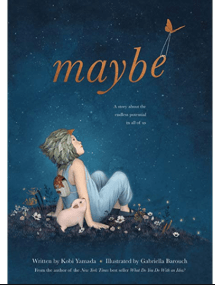
Dorfman and Cappelli also suggest that literature is a great way to encourage our students to write. There are several ways that books can do this. The first being read alouds. When you read aloud to students, you are creating a unique environment where every student will hear the same story but will take away something different. This is because each child will connect to the book in a different way. Some simple and some more complex and thought provoking. Once the students have a connection to the text, this opens the door and invites them to have something to write about. I really like how these two authors use the term “unearth” when they are talking about digging up and bringing writing topics to life for students. Another great way to use books to help inspire writing is through the illustrations. We have all heard the saying “A picture is worth a thousand words” many a time. This saying still stands true for our students because the illustrations in the books they are reading provide an invitation for them to write about as well. Books allow for students to make connections with the characters feelings and actions as well. (Mentor Texts, pp. 28) While reading this I had a wonderful idea of a text that I recently stumbled upon that I think would serve as a great mentor text to get students excited about writing. This book is called Maybe by Kobi Yamada and is about living up to the potential that we all have. Not only does this book provide hopeful inspiration to all who read, but offers many great writing ideas including; what you want to be when you grow up and where you want to go. The illustrations in this book are also breathtaking and can provide students with ideas to write about as well.
Writers Café
The idea of a writer’s café was surely not something I had ever thought about before, but I will sure be using it in my classroom one day. The way this works is you set up a place, can be outdoor or indoor (personally I loved the book’s suggestion on outdoor) and have students take their writers notebooks with them and write about their environment, surroundings and observations. I think this is a great idea because it adds something new into the equation. Typically students see themselves writing at their desk or in some unnatural and uncomfortable place. When really, we should invite students to write in places that are more comfortable to them. This is why I like the idea of the outdoor writers café because they can go outside, get fresh air and find something, at least ONE thing to write about. This makes the writing experience real for them and can help them feel as though they are real writers ( which we know they are, they just have to believe that they are!)
Brown Girl Dreaming pp. 1- 42
In this first section of Brown Girl Dreaming by Jaqueline Woodson, there are several important things to take note of. The first is that this book is written in verse form, which makes the book very easy to read. I flew through the first section learning about the main character and her family. Another thing to take note of is the information we are learning about the family. They come from a time when there was racial segregation and unequal opportunities. We learn that they live up north where the racial conflict is not as bad, and we also learn that going down south can be very dangerous for them during this time. We learn about the importance of family and the value they place (especially her mother) on being at home and around family.
Names/ Identity
According to American author Ralph Ellison,
“It is through our names that we first place ourselves in the world. Our names, being the gift of others, must be made our own.”
This quote really speaks to me because once we are given a name, it becomes ours. And ours to make something out of. Ellison make a profound statement that opens the door for many people to think about and share their own stories about their names and the impact on their life.
As I read Brown Girl Dreaming, one evident theme in this book is going to be identity. Specifically your name, and how your name plays a role in your identity. In the very beginning of the book, page 6, we learn early on about “a girl named jack” and the reasons her father had behind giving her such a name. Woodson also writes about the “the woodsons of ohio” and the history of the Woodson name in Ohio. Names reveal stories- stories about you, the person that gave you your name and even the entire history of your family. Woodson says “Well it all started back before Thomas Jefferson Woodson of Chillicothe… and they’ll begin to tell our long, long story.” (Brown Girl Dreaming pp. 9)
“McKenna” Excerpt from my Writers Notebook about my name
When I was growing up, my mom kept a frame in my room with my name on it and where it came from and what it meant. McKenna (the right way to spell it- not Makenna, Mykenna or Mekenna) means respect or beloved. It comes from Irish and Scottish decent. I didn’t like my name as a kid because it was so different; which is why my mom loved it so. My mom gave me this name because my nana had a friend far away who had a granddaughter named McKenna and my mom fell in love with it right before I was born. I thought my name was odd- but now I love it and feel so unique. My name connects me to so many people in my family. 1) My mom- the Giver. 2) My nana- the Inspiration. 3) My papa- for his middle name Lane which my mom changed to Layne to make it more feminine. 4) My granny- we share the same initials MLW. Before McKenna came along, I could have been a Shelby or Kelsey- which I am so glad I’m not. Most people have to ask how to spell my name- and most also ask “little c, big K?” Which I really have no preference. My birth certificate says Mckenna but I think that McKenna is prettier and more professional. I embrace my name and is not another McKenna Layne Wild. I am she and the only on there will ever be.
Heart Maps
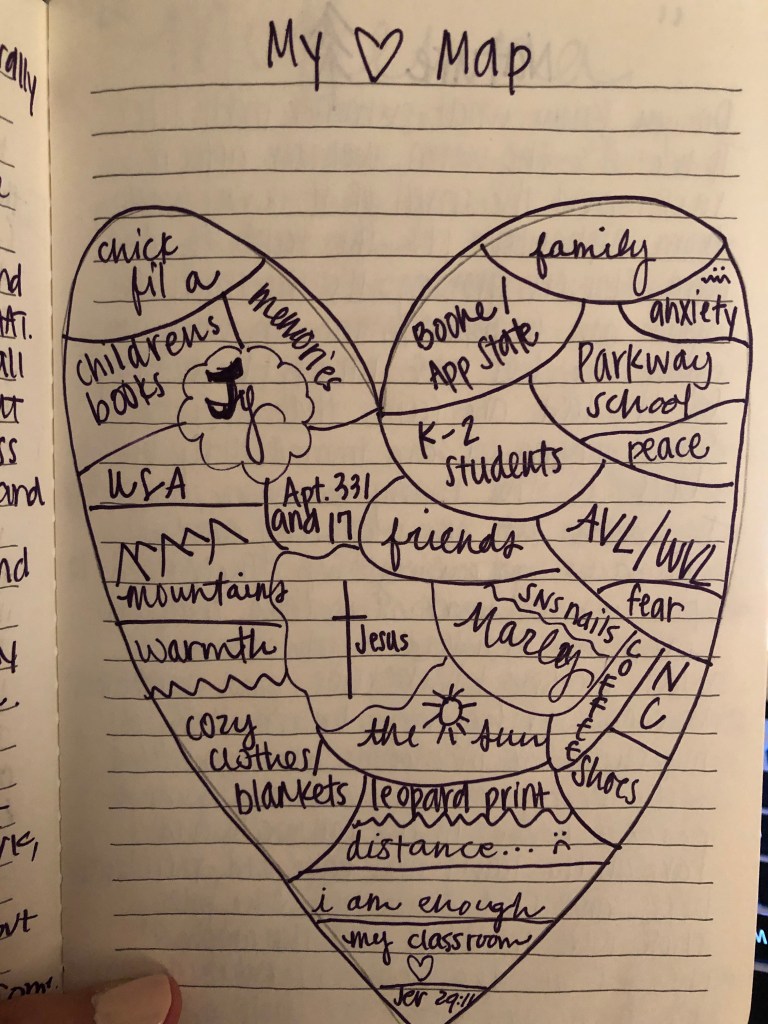
Heard makes a great argument in his article Heart Maps: Helping students create and craft authentic writing about how inviting our students to brainstorm things that make them happy, that they care about, people, places and things that matter to them can give students the opportunity to create their own writing topics. These ideas are important because they are personal to the student and these ideas have come from their own minds rather than being given a prompt and told what they have to write about. Pictured below is my take at a Heart Map for future writing ideas for myself.
Heart Map, McKenna Wild 01-23-2020
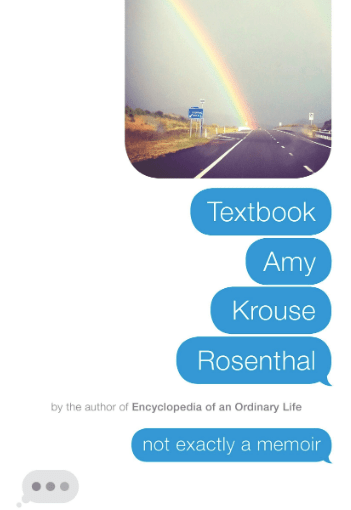
Textbook Amy Krouse Rosenthal
One of the most amazing things about the book by Rosenthal, is that this book is written using a stream of consciousness. AKR writes in a way that gets her thoughts directly from her mind out on the page for readers to read. It’s almost like you are having a conversation with her and can get to know her so much easier through the things she writes about. AKR shares stories, experiences, feelings and emotions with her readers that make her so easy to relate and connect with. Which, as teachers, we want to introduce students to texts that will serve them this way and can help them think of how they can write in that way too. From this book, I am learning that writing these random thoughts and experiences that happen to me, down on paper, is in itself a beautiful form of writing and shows how ones innermost thoughts can be shared with others.
A student who keeps a notebook can begin to live like a writer– noticing, paying attention, listening, collecting, musing, wondering, playing with language, taking pleasure in her own words.”
It’s a Place
“Why am I keeping this notebook?
Because it’s a place where I can keep track of my life.
It’s a place where I can observe closely
And where I can store little pieces of strength.
It’s a place where I can keep the elements of Life
(lightening, fire, ice, time and space) and Writing
(poetry, words, eyes).
It’s a place where tales weave.
All in all
It’s a place for ME.”
This poem answers the questions beautifully of what all a writers notebook can be to young and mature writers! A writer’s notebook can be a place to dream, wonder and explore according to Ralph Fletcher, author of The Writer’s Notebook. Fletcher makes many valuable points but I think that the ideas that stuck with me the most would be that the notebook provides a safe place for writers to write where there are no fears of grades, corrections or criticisms. Another point he made that I resonated with as an educator is that “writers react.” When students are writing, they are reacting to things going on in their lives, heads and environment and their writing gives an important insight to how we can get to know them better.
Watch to see how many different things you can include in a writers notebook!
Teacher Take-Aways
There were several key teacher take-aways that I feel are worth noting. The first and most important is that we have to have a plan in order to execute the use of writers notebooks effectively in our classrooms. Our students also have to see us actively engaging as writers as well. This will provide value to what we have them do and serve as a good model for how we want kids to use the notebooks. Other key take aways were the two strategies mentioned in the article to help students get started with diverse types of writing in their notebooks. As teachers, we have to break the mold and let students know that there is not a right or wrong way to write in THEIR notebooks. Many students may have the misconception that anytime they write a journal entry it has to be formal and written in paragraphs. However, Fletcher indicates that this is not the case and that students can take writing in all of it’s forms to make journal entries. He says that we should “invite students to bring in photographs, ticket stubs, postcards, letters, item from collection, lock of hair, or anything else thats special to them” to place in their journals as inspiration for writing about their thoughts and feelings.
As teachers, we always want to be real and transparent with our students. Dorfman and Cappelli say that “when we write our own memoirs, poems, and essays and share them with our students, we learn to enjoy our writing, and at the same time, we become more real to our students.” This is so important because along with mentor texts, we are the greatest mentors for our students when it comes to writing. I really like how they talk about how readers become writers and that through reading, students can learn about and create their own writing style.
I was fascinated with the questions Dorfman and Cappelli bring up regarding what happened to convince students that they can’t write or do not have the skills it takes to be a “good writer.” This is something I think of often as I am teaching my own students during reading interventions. Sometimes, it is like pulling teeth to get these students to write one sentence because they “don’t know what to write about.” I think this is something we should all think about and transform our teaching to help these students feel more prepared and confident when it comes to writing. Lastly, one of the final take-aways from the Mentor Texts book was the piece about reflection. Reflection is key in writing. Writing really is just one large reflection of our thoughts and feelings on something. But it is also a large component in giving students time to think and actively engage in the writing process.
Two key strategies included in the article were:
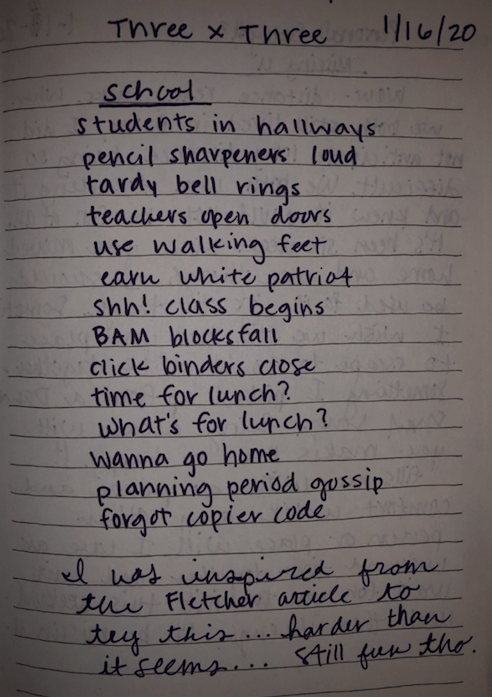
Three x Three- takes a list formation
Write about Your Name- writing about your name in any way you want
My own attempt at doing a three x three writing exercise!
Textbook Amy Krouse Rosenthal
Honestly– this book needs it’s own section because it is brilliant and hilarious! I could not stop reading until the next section once I started. I was captured by the humor and the ability to connect with much of what she was writing about. I think this is the key to reading/ writing right there. Being able to connect to something you read gives you the ability as the reader to write and create something of your own. Connections and memories allow for so many opportunities to write– as adults and for our students. One of the biggest points AKR made, was about the importance of geography in our writing. A single place can bring memories and thoughts or emotions to our minds that we are able to write about.
~~Serendipity~~
“the occurrence anddevelopmentof events by chance in a happy or beneficial way”
AKR spends a while writing about serendipity- these stories that happened in her life that brought happy and beneficial memories back to her. I was able to reflect on times like this in my life- moments that brought me serendipity. I’m not sure if I believe in coincidences as much as I do divine intervention. One story that comes to mind I was able to revisit was the time I moved into my first apartment. I was standing at the leasing office and they just told me that they had leased all of their two bedroom apartments. Frustrated and defeated, my roommate and I took a moment to think about some options. As we were about to give up and leave, an old friend of mine from high school and her roommate found theirselves in this situation at the exact time in the exact place. Fortunately, the complex had plenty of four bedroom apartments for lease. We all decided to room together and the last two years spent together led to beautiful, life-long friendships. This is a moment in my life I can relate to serendipity.








 Ms. Wild's Thoughts