

Literature triggers thoughts, unlocks memories, and helps children realize they have something important and interesting to say. We want children to remember the powerful memories they often forget when they sit down for writing time.”
Shelley Harwayne, Lasting Impressions, Mentor Texts pp. 21
Our goal as educators is to ensure that students are learning and enjoying the things that we are having them do. So why is it that we get students to write, they complain and can never think of something to write about? I think the reason that kids think like this is because somewhere in their young lives, they have been defeated by writing because they feel as though they aren’t good at it. This idea has got to change! Through the implementation of writers notebooks and writers workshops, we can ensure that students are not only going to be successful in writing but also enjoy it as they are doing it.
I am currently a reading specialist and serve students in the primary K-2 grades. I have a terrible time getting one of my students to write. We often sit there for minutes at a time without speaking as she thinks of something to write about which usually ends in “I don’t know.” This is frustrating for me, but I’m sure the child is more frustrated than I am. After reading Dorfman and Cappelli’s work, I have begun to think about different approaches that might invite the students to connect more to writing. Some students have a hard time writing because they may fear that others do not care about the topics they want to write about. Dorfman and Cappelli suggest that conversations with students about their personal experiences and everyday occurrences in their lives help to unearth writing topics we didn’t even know were there and that we should encourage students that these are worth sharing! (Mentor Texts, pp. 22) This is why ween need writers notebooks- to carry and hold all these “treasures” that students have in their minds to write about.
Using Literature to help ‘spark’ writing topics
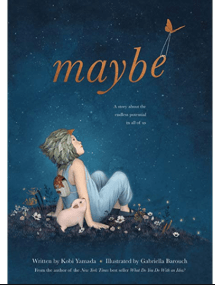
Dorfman and Cappelli also suggest that literature is a great way to encourage our students to write. There are several ways that books can do this. The first being read alouds. When you read aloud to students, you are creating a unique environment where every student will hear the same story but will take away something different. This is because each child will connect to the book in a different way. Some simple and some more complex and thought provoking. Once the students have a connection to the text, this opens the door and invites them to have something to write about. I really like how these two authors use the term “unearth” when they are talking about digging up and bringing writing topics to life for students. Another great way to use books to help inspire writing is through the illustrations. We have all heard the saying “A picture is worth a thousand words” many a time. This saying still stands true for our students because the illustrations in the books they are reading provide an invitation for them to write about as well. Books allow for students to make connections with the characters feelings and actions as well. (Mentor Texts, pp. 28) While reading this I had a wonderful idea of a text that I recently stumbled upon that I think would serve as a great mentor text to get students excited about writing. This book is called Maybe by Kobi Yamada and is about living up to the potential that we all have. Not only does this book provide hopeful inspiration to all who read, but offers many great writing ideas including; what you want to be when you grow up and where you want to go. The illustrations in this book are also breathtaking and can provide students with ideas to write about as well.
Writers Café
The idea of a writer’s café was surely not something I had ever thought about before, but I will sure be using it in my classroom one day. The way this works is you set up a place, can be outdoor or indoor (personally I loved the book’s suggestion on outdoor) and have students take their writers notebooks with them and write about their environment, surroundings and observations. I think this is a great idea because it adds something new into the equation. Typically students see themselves writing at their desk or in some unnatural and uncomfortable place. When really, we should invite students to write in places that are more comfortable to them. This is why I like the idea of the outdoor writers café because they can go outside, get fresh air and find something, at least ONE thing to write about. This makes the writing experience real for them and can help them feel as though they are real writers ( which we know they are, they just have to believe that they are!)
Brown Girl Dreaming pp. 1- 42
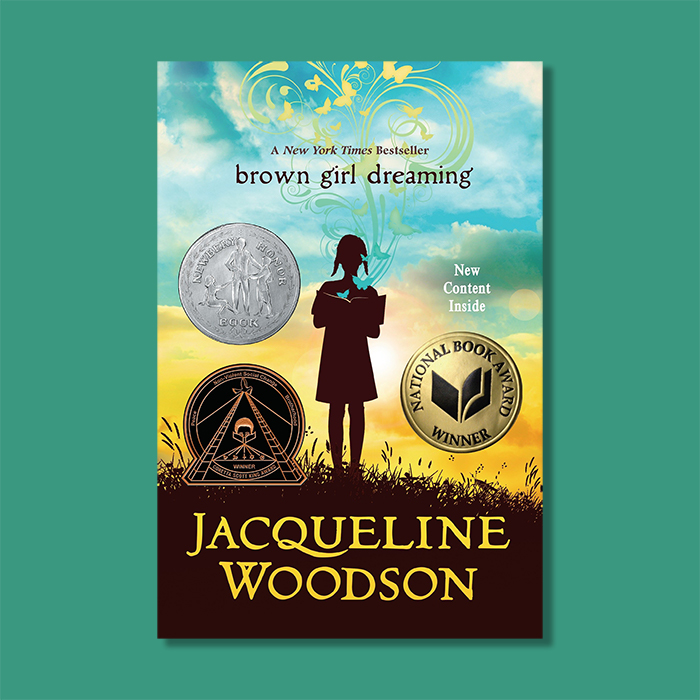
In this first section of Brown Girl Dreaming by Jaqueline Woodson, there are several important things to take note of. The first is that this book is written in verse form, which makes the book very easy to read. I flew through the first section learning about the main character and her family. Another thing to take note of is the information we are learning about the family. They come from a time when there was racial segregation and unequal opportunities. We learn that they live up north where the racial conflict is not as bad, and we also learn that going down south can be very dangerous for them during this time. We learn about the importance of family and the value they place (especially her mother) on being at home and around family.
Names/ Identity
According to American author Ralph Ellison,
“It is through our names that we first place ourselves in the world. Our names, being the gift of others, must be made our own.”
This quote really speaks to me because once we are given a name, it becomes ours. And ours to make something out of. Ellison make a profound statement that opens the door for many people to think about and share their own stories about their names and the impact on their life.
As I read Brown Girl Dreaming, one evident theme in this book is going to be identity. Specifically your name, and how your name plays a role in your identity. In the very beginning of the book, page 6, we learn early on about “a girl named jack” and the reasons her father had behind giving her such a name. Woodson also writes about the “the woodsons of ohio” and the history of the Woodson name in Ohio. Names reveal stories- stories about you, the person that gave you your name and even the entire history of your family. Woodson says “Well it all started back before Thomas Jefferson Woodson of Chillicothe… and they’ll begin to tell our long, long story.” (Brown Girl Dreaming pp. 9)
“McKenna” Excerpt from my Writers Notebook about my name
When I was growing up, my mom kept a frame in my room with my name on it and where it came from and what it meant. McKenna (the right way to spell it- not Makenna, Mykenna or Mekenna) means respect or beloved. It comes from Irish and Scottish decent. I didn’t like my name as a kid because it was so different; which is why my mom loved it so. My mom gave me this name because my nana had a friend far away who had a granddaughter named McKenna and my mom fell in love with it right before I was born. I thought my name was odd- but now I love it and feel so unique. My name connects me to so many people in my family. 1) My mom- the Giver. 2) My nana- the Inspiration. 3) My papa- for his middle name Lane which my mom changed to Layne to make it more feminine. 4) My granny- we share the same initials MLW. Before McKenna came along, I could have been a Shelby or Kelsey- which I am so glad I’m not. Most people have to ask how to spell my name- and most also ask “little c, big K?” Which I really have no preference. My birth certificate says Mckenna but I think that McKenna is prettier and more professional. I embrace my name and is not another McKenna Layne Wild. I am she and the only on there will ever be.
Heart Maps
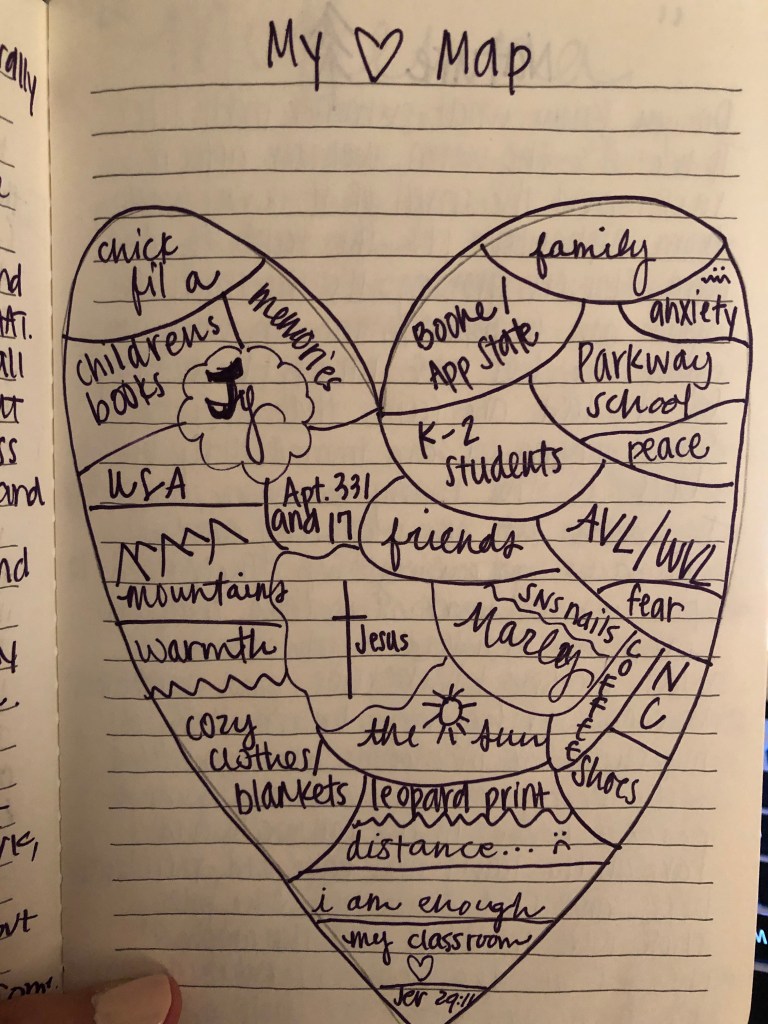
Heard makes a great argument in his article Heart Maps: Helping students create and craft authentic writing about how inviting our students to brainstorm things that make them happy, that they care about, people, places and things that matter to them can give students the opportunity to create their own writing topics. These ideas are important because they are personal to the student and these ideas have come from their own minds rather than being given a prompt and told what they have to write about. Pictured below is my take at a Heart Map for future writing ideas for myself.
Textbook Amy Krouse Rosenthal
One of the most amazing things about the book by Rosenthal, is that this book is written using a stream of consciousness. AKR writes in a way that gets her thoughts directly from her mind out on the page for readers to read. It’s almost like you are having a conversation with her and can get to know her so much easier through the things she writes about. AKR shares stories, experiences, feelings and emotions with her readers that make her so easy to relate and connect with. Which, as teachers, we want to introduce students to texts that will serve them this way and can help them think of how they can write in that way too. From this book, I am learning that writing these random thoughts and experiences that happen to me, down on paper, is in itself a beautiful form of writing and shows how ones innermost thoughts can be shared with others.
Important Resources for Teachers
- http://www.sharingournotebooks.amylv.com/2016/05/katie-liseo-chance-to-be-adventerous-as.html
- https://twowritingteachers.org/2015/08/03/creating-classroom-environments-introducing-writers-notebooks/
- http://georgeellalyon.com/where.html
- https://iamfromproject.com/
- https://twowritingteachers.org/2015/09/04/walk-like-a-writer/

 Ms. Wild's Thoughts