
Week 5: Freedom Over Me, Freedom in Congo Square and… Freedom for all
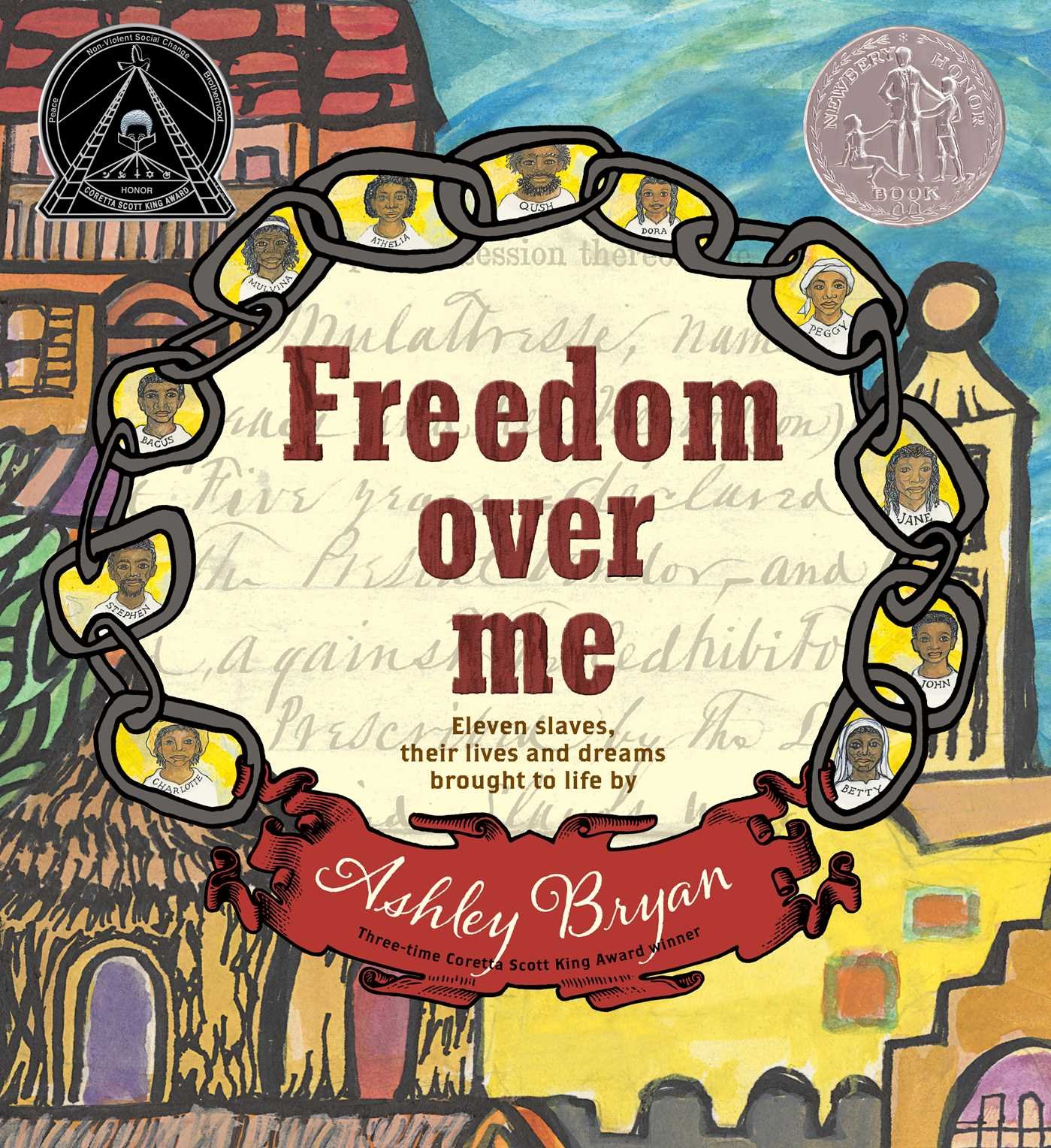
Freedom Over Me
Freedom Over Me is a powerful story that brings eleven enslaved African’s to life through poetic verse. These stories are brought to life through author/ illustrator Ashley Bryan who reviewed the historical documentation of the appraisal of the Fairchild’s Plantation from the 1800’s. I loved the set up that Ashley Bryan created for the book. Each person has a page that tells about their life- their role on the plantation as well as a page that includes their dreams- their aspirations outside of slavery. Readers should pay close attention to the fonts used on the pages. All of the dreams pages are written in another font- a somewhat whimsical font that makes you feel like you’re dreaming. As the reader, we have to question ourselves and critically look at the authors reasons for doing it this way. Ashley Bryan took an interesting approach- he writes not as an Own Voice author, but as an author that sought the opportunity to share a good story about the lives of just a handful of the many that were enslaved. Slavery is such an important event in our history that impacted and still impacts the lives of many African Americans today. It is imperative that we use texts like this in our classrooms that can educate our students about the issue of slavery and the oppression that it cast upon those enslaved peoples.
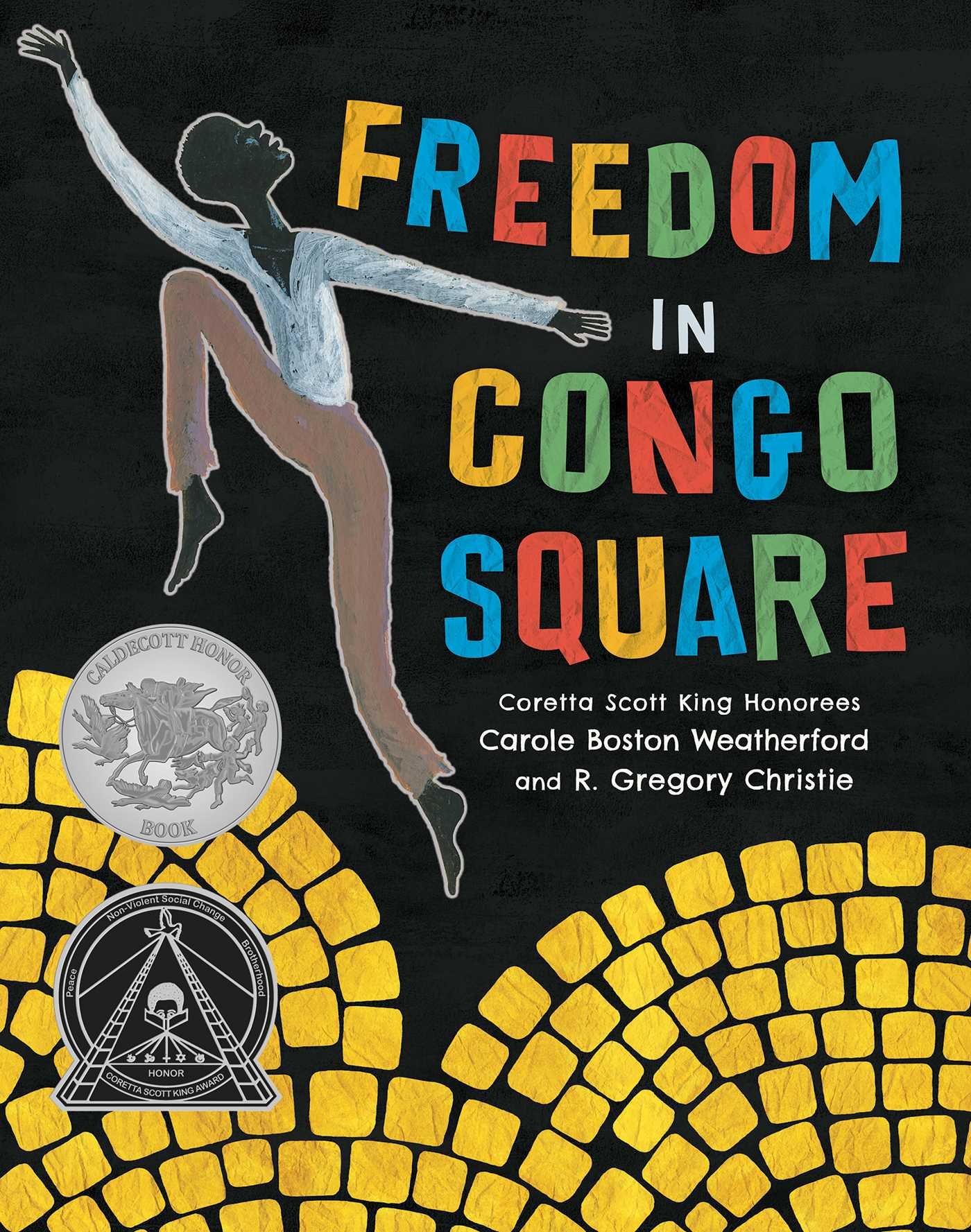
Freedom in the Congo
This book is so unique in many ways! The first thing that stood out to me was the format that the author chose to write the text in. Weatherford and Christie wrote this using poetic elements. These short , rhyming verses help young readers to understand the story more clearly over the traditional paragraph structure. When reading texts about such a critical point in history, we must make sure to have real conversations with our students about what they are seeing on the pages. Some of the pictures and words in the book have a deeper meaning meant to teach children about this time in American history. When reading these stories to our students, we can help support racial trauma and encourage healing within our classrooms for those who identify with the characters in the book. As Roberta Gardner says, it is important to use this text to discuss possibilities the enslaved people went through and create a safe place to learn and talk about these peoples. I enjoyed watching this video read aloud of the story that included musical instruments that I feel really helped me connect to the story as I followed along.
Are any characters privileged or marginalized? How are the lived experiences of historically minoritized populations represented in the text?
Both Freedom Over Me and Freedom in Congo Square are books written about marginalized groups of people. These books feature people of color who were impacted by the African Slave Trade and slavery here in the United States. Both Bryan and Weatherford talk about the lives of the people caught up in enslavement. Each character in these stories are a person of color, who historically and still are, marginalized peoples. In these texts, the historical events of their lives as slaves are represented. From the days in the cotton fields, to working on the plantations, these characters are living in oppression. In each of these stories, we see a glimpse into the lives of those who were held to slavery and how the yearned for freedom for a better life.
Persona Poem
I am unique and curious
I live somewhere on the bridge between the islands and anchored raftworld
I wonder why he chose ME to solve “the problem”
I hear the sounds of the water in the hydrolics
I want to know why I am different and struggle with social situations
I’m as quiet as a mouse at first, then I open up.
I question how I can solve the problem
I feel nervous they’ll know I can;t remember them and think I’m weird
I taste the fresh green bread still steamy warm it can melt butter
I worry what Kinchen is doing without me there
I excel at talking to fish- they understand me
I understand Kinchen only wants to protect me
I am unique, curious, intuitive and dependent.
I say I can do things on my own
I believe that there is something else the raftking is hiding
I dream about the translucent, wavy waters
I try to remember who I’ve seen- the twins were an enigma to me
I hope to resolve the problem
I was once left an orphan- afraid and alone
But now I am mature and belong to Old Ren- my family
I am unique and curious.
I am Pip.
Above is the Persona that I wrote about the character Pip from H.W. Bouwman’s A Crack in the Sea. Here I assumed the identity of Pip, a young boy who suffers problems with social situations and is curious about the world around him. The purpose of writing this was to get inside the characters head and give a real, authentic interpretation of the character after reading the book. Another purpose for this was to help my readers to identify with Pips thoughts and emotions. This is a critical tool for students to have as they are reading because it will help them better relate to texts they are reading. Writing a personal account about Pip helped me to better understand him as a character and his role in the story.
What reading/writing mini-lesson could be taught through this book or passages from the book?
As teachers, it is incredibly important that we model the activities we are giving and showing our students. I think participating in writing persona’s helps students realize that we value the importance of the poetry that we are teaching them how to read and write. Poetry opens a wide gate for students when it comes to literature. Many students do not enjoy poetry or see the value in its format. I believe there is a lot of artistic and creative value that makes up poetry. I think that after reading these books, we could encourage our students to engage in poetic writing forms as well. As a mini lesson for my students, I would read Freedom in Congo Square and then have students think about the rhyming format that Weatherford used. Then have them do a short activity with rhyming words that can help lead them up to writing their own piece of poetry with verses that exhibit rhyme.
As teachers, we can help our students learn to love poetry by introducing them to the many forms of it and reading them stories such as Freedom Over Me and Freedom in Congo Square. In the article Walking Into the Wardrobe and Through the Sliding Glass Door: Writing Persona Poems with A Crack in the Sea, we learn that writing has been found to help students deepen their understanding of a text so by having our students write about text, we can measure their comprehension. After all, writing is just a written form of our thinking. Elizabeth Frye and Lisa Hash offer great insight as teachers on how to use this I Am poem format in our classrooms with our students. In The Voices of Children, they give us a step by step model on how to do this activity with our students. It is so important that we model for our students to help scaffold their learning as they are deepening contextual comprehension.
Teaching Resources
Related Text & Making Connections Across Texts
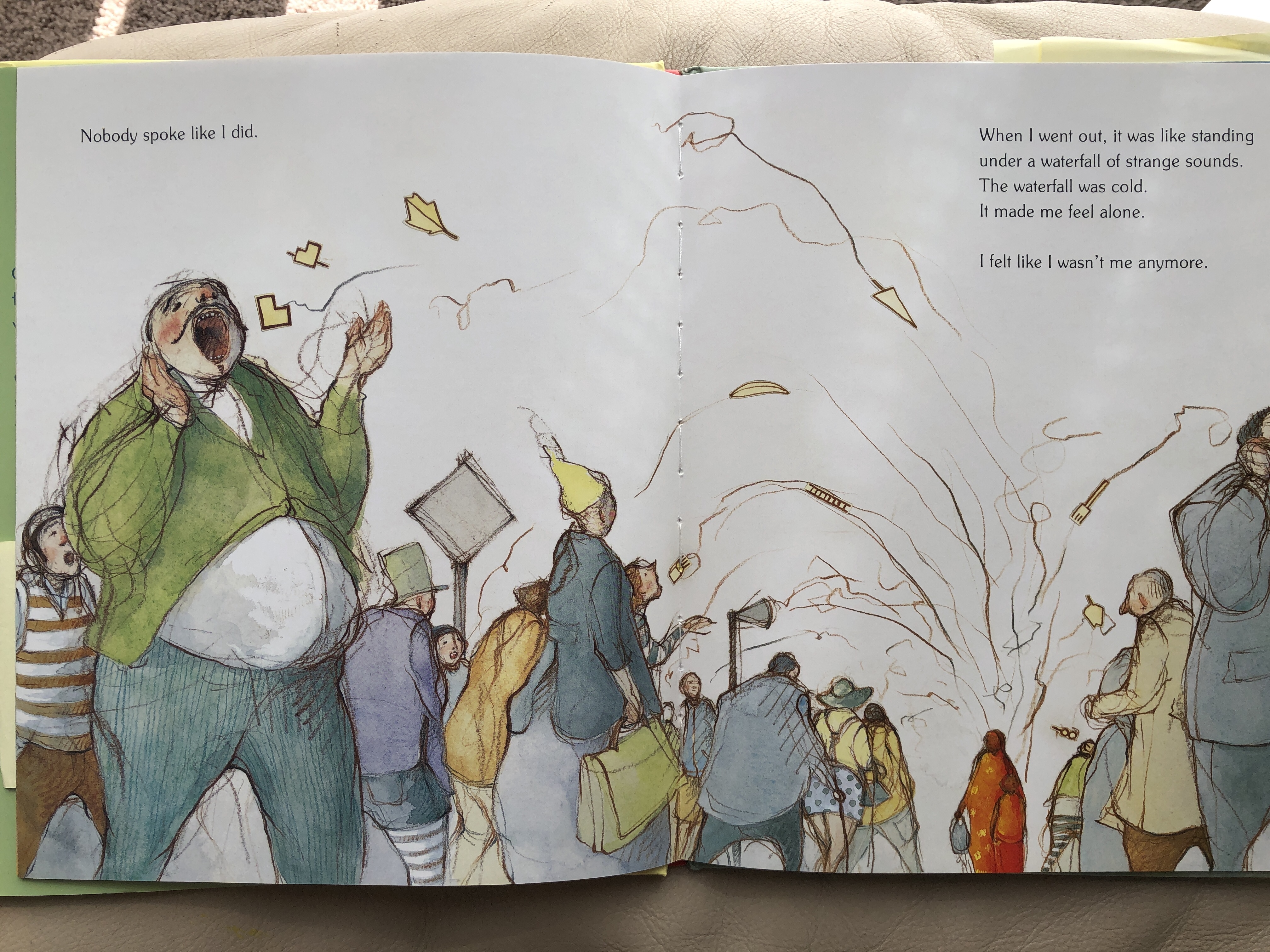
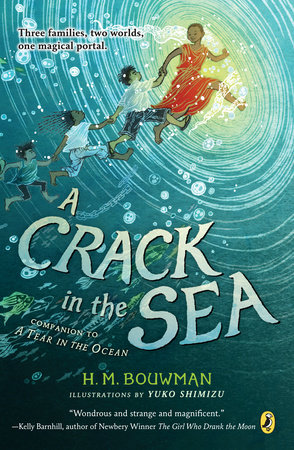
When reading Freedom Over Me and Freedom in Congo Square I was able to make some connections across texts from previous posts. Featured above is a spread from the book My Two Blankets, and the cover of the historical fantasy novel, A Crack in the Sea. In the spread from My Two Blankets, you see many people who appear to be talking, but only lines and symbols come out of their mouths. This represents that the main character, Cartwheel, does not understand the language that is being spoken around her in this new place. Similarly, the African people who were taken from their homeland during the Atlantic Slave Trade were suddenly immersed into a culture around people that were not like them and could not understand the language. After reading A Crack in the Sea, I built on my prior knowledge about the slave trade and the terrible conditions on board the Zorg- a famous African Slave ship. Reading these other books allowed me to build a schema for the topic/issue brought up in Freedom Over Me and Freedom in Congo Square.
References:
Frye, E. M., Hardin, B. L., Bouwman, H. M., & Stumb, A. E. (2018). Walking Into the Wardrobe and Through the Sliding Glass Door: Writing Persona Poems with A Crack in the Sea. Voices from the Middle, 26(2), 46–52.
Frye, E. M., & Hash, L. A. (2013). The Voices of Children: Re-imagining the Internment of Japanese Americans through Poetry. Social Studies and the Young Learner , 25(4), 30–32.
Gardner, R. P. (2017). Discussing Racial Trauma Using Visual Thinking Strategies . Language Arts Lessons, 94(5), 338–345.

 Ms. Wild's Thoughts