
Week One: Wild About Reading
About the book:
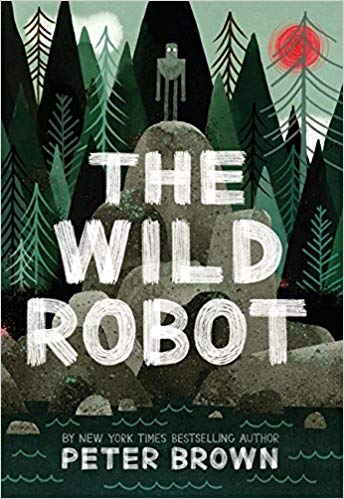
This book is about a robot named Roz that discovers herself alone on a deserted island. This is an empowering story of how Roz finds out who she is and how to adapt to her surroundings. Follow along as Roz learns to make this place her home- and how she decides to define home and her family.
Author: Peter Brown
Copyright: April 2016
Publisher: Little, Brown and Company
Discuss one of the main characters. How did the author make this character unique and believable? What issues does this character grapple with? How does the character evolve across the book? How were you able to relate to the characters?
Roz is the main character of this book. She is unique in many ways. First of all, she is a robot- a robot who finds herself existing out in the wild. Even though she is somewhat of a fantastical creature that has been brought to life, she experiences some really human hardships. Some of those hard ships include struggling to find who you are and your place in the world. Another hardship is finding and making friends that are different than you are. Throughout the book, Roz discovers who she is and is able to make friends with those around her on the island.
What special meaning or message does the book convey to you? Do you think this is a worthwhile theme for elementary/middle-level students? Explain.
This text is definitely a great choice to have around in your upper elementary and middle school classes because of the messages it conveys to the readers. One important message that is conveyed in this book is that we have the power to use the circumstances that we have been given and make the best of it. What I mean by this is that we have the opportunity to discover more about ourselves when placed in situations like Roz. Roz overcomes being uncomfortable in her situation by branching out and making friends as well as discovering who she is. I think that the reason this is so good for our elementary and middle level students is because we need to teach them that it is okay to struggle with your place in the world and finding where you fit/ who you are. This book gives a plain example of a robot (which we all know does not belong in the wild) adapting to the surroundings. This is important because the students that we will be teaching will be going through a lot of transitional change and might find comfort in relating to a character like Roz.
Related text….
About the book:
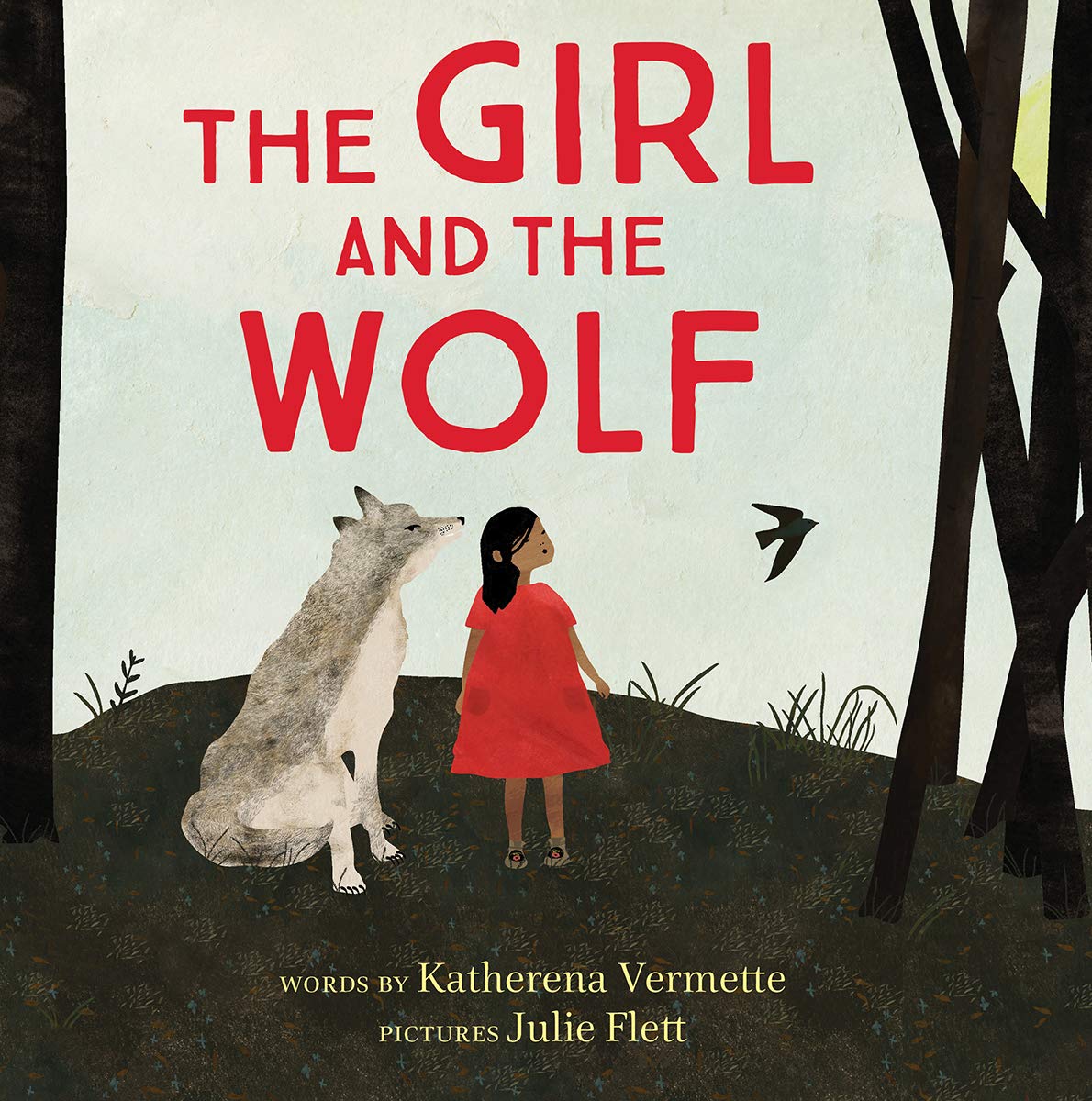
This book is about a little girl who wanders astray from her mother. She finds herself among the unknown. Until… a friendly wolf befriends her! Follow along as this author reverses historical fiction norms and see how the little girl finds her way back home!
Author: Katherena Vermette
Illustrator: Julie Flett
Copyright: February 2019
Publisher: CELA Publishing
What special meaning or message does the book convey to you? Do you think this is a worthwhile theme for elementary/middle-level students? Explain.
This book conveys several special messages for not just children, but all who read this story. The first is that we should not fear the unknown just because we have not experienced it yet- or we are afraid to do something on our own. In this story, the little girl was unsure of her surroundings and was uneasy around the wolf at first. Then, the wolf helped her to find what her fears were keeping her from. Because she was so afraid, she was not able to think clearly and process how to solve her problem. The wolf simply allowed her to see what she already knew and helped her problem solve to herself out of the situation she had gotten herself into. This also displays that we can place trust in others who have our best interest at heart. As a child, there are many people in their lives who want to see them succeed and have their best interest at heart. I think these are both worthwhile themes for elementary and middle school aged children because these are critical ages where many things in their lives are changing or evolving. Their minds are being exposed to tons of information and they are gaining valuable knowledge to take with them on life’s journey. By introducing students to this text, they can learn from these themes that they should not fear the unknown, and that someone they may perceive as a “bad guy” can actually really have their best interest at heart and want to see them succeed.
Does the author use details accurately and does this work avoid stereotypes? Does
the author use language authentically?
In this modern fiction tale, the author does a wonderful job at reversing the stereotypical views of characters such as “the big bad wolf.” In my experience, and probably many others as well, growing up we always heard stories where the “wolf” was the bad guy and that the would harm the characters in the story. However, in this story. that is not the case. This story empowers the role of the wolf and establishes him with a positive role in the story. I think that exposing children to literature where the roles are reversed will really help children to understand that certain texts do contain stereotypes. I appreciate the authors willingness to create a work that gave a positive nature to a type of character that usually is seen as a negative character. Also, the author does include some various languages in her text at the end of the story in her authors message. I think this is important because that makes this text culturally relevant to all readers. Also, one last note on this- I think this book does a great job at addressing this “big bad wolf” stereotype and how the “wolf” is not necessarily out to get you. By reversing this stereotype, students can take away that they should not be afraid to face what causes them fear- and just like the little girl in the story, give the unknown an opportunity to see and judge for yourself.
Applications to teaching…
What reading/writing mini-lesson could be taught through this book or passages from the book?
There are many things that we can do with this text as teachers to create reading or writing mini lessons for our students. One idea that comes to mind that I would like to implement into my classroom would be a reading lesson about comparing the two texts. With this book, I think I could do a great activity where we compare the two roles of “the wolf.” In The Girl and The Wolf, the wolf is seen as a friendly, wise character who helps the girl to get herself out of a tricky situation. Alternatively though, in classic stories such as “The Three Little Pigs” the wolf is an evil and something terrible happens at the end. This would be a good time to talk about authors perspective and different authors writing styles. Students could have conversations in small groups, whole group or even do a journaling activity where they write about their thoughts comparing the two stories.
In addition to this mini lesson, there are also some great things that can be done with The Wild Robot. One of my go to mini lessons for writing is a quick creative writing prompt that goes along with the text we are reading as a class. For this book, I would have the students imagine that they were the main character Roz. I would have them write about what they would do if they woke up one morning and realized they were on an island and needed to figure out what to do to survive. Then they can add details on how they would go about surviving on their own. Writing always pairs really well with fiction/ fantastical texts. I think that as teachers it is important for is to share texts like these two with our students to expose them to quality themes and messages from literature.
What makes a “good” book?
As teachers, I think it is critical that we evaluate the material that we place on the shelves for our classroom libraries. When I think of a “good book,” I think of a book that will provide a lesson/ moral or theme that we can teach our students. A good book is far more than a story with intricate pictures. (Although, beautiful illustrations really support readers and are so fun to engage with!) I also think that a good book has words that students understand- words that they know and use in their dialogue. A “good book” leaves a reader wondering and asking questions. A “good book” is more than just a story- it makes the reader feel something. As humans, we really connect with something through our feelings- and so having emotions and feelings as we read helps us connect to the text. It also lets the reader spark imagination and create images in their mind as they read. A “good book” can be related back to life and students can make connections whether it be to themselves or to the world. “Good books” inspire children to want to read more!
We have the power as teachers to introduce our students to stories. Stories that can teach them about life, lessons, friendship, growing up and so on. Kathy G. Short, author of Story as World Making, says that “We also tell stories to make connections, form relationships and create community with others.” As teachers, we can connect with our students via stories and share common experiences in our classrooms. Students will learn so much about themselves, each other and the world from telling/ listening/ reading stories at school. Our jobs as teachers is to “light fires” in our students. We are able to do that by exposing our students to texts such as The Girl and The Wolf and The Wild Robot to give our children a story that will help them learn lessons, about each other and the world around them.
Reading stories brings students a community. Colby Sharp, author of Readers Can Do Anything, spoke about how reading builds a community within the classroom. Whether this be students bonding over choice of text or being in the small reading group, this makes them part of a community of readers. When students share text, they are able to foster relationships and grow together as readers. One of my favorite points that Sharp made was about the value of positive reading experiences. When we share stories with our students, we are giving them a positive reading experience. These experiences (such as the mock Caldecott activity) will build up a love and confidence for reading that will help them as they grow and grapple with diverse texts such as The Girl and The Wolf and The Wild Robot. In relation to the children’s literature that we read this week and how providing diverse text allows for our students to relate to other cultures/ types of people, I would like to note that we are giving our students who do come from different cultures and backgrounds the opportunity to enjoy the text that they are reading.
Citations:
- Short, K. G. (2012). Story as World Making. Language Arts, 90(1), 9–17.
- Sharp, C. (2018). Readers Can Do Anything: Our Children’s Literature Day Lunch Keynote on the Transformative Impact of a Good Book. Literacy Today, 35(6), 40–41.Short, K. G. (2012). Story as World Making. Language Arts, 90(1), 9–17.

 Ms. Wild's Thoughts